 Inquire(

 HOME
How to Develop Modest Activewear for Hot Climates
 2026-10-21

 Sansansun
How to Develop Modest Activewear for Hot Climates
Developing modest activewear for hot climates requires more than choosing lightweight fabric. Brands must balance coverage, breathability, opacity, fit, and freedom of movement. For businesses targeting the UAE, Saudi Arabia, Qatar, and other warm-weather markets, these factors are important when developing modest gym wear, long-sleeve training tops, and full-coverage sportswear.
The key is to consider garment design, fabric behaviour, and sample testing together before moving into bulk production.
Design for Coverage and Movement First
Start by defining the intended coverage with your target customers. Requirements for neckline, sleeve length, garment length, body outline and head coverage can vary between customers and activities. Translate these preferences into measurable design requirements, then evaluate garment length, sleeve shape, pattern ease and trouser width together.
Rather than making every garment excessively loose, brands should develop patterns that allow natural movement while maintaining the desired silhouette. For example, long-sleeve tops need comfortable arm movement, while training pants require sufficient room for bending, stretching, and walking.
Match Each Garment to Its Purpose
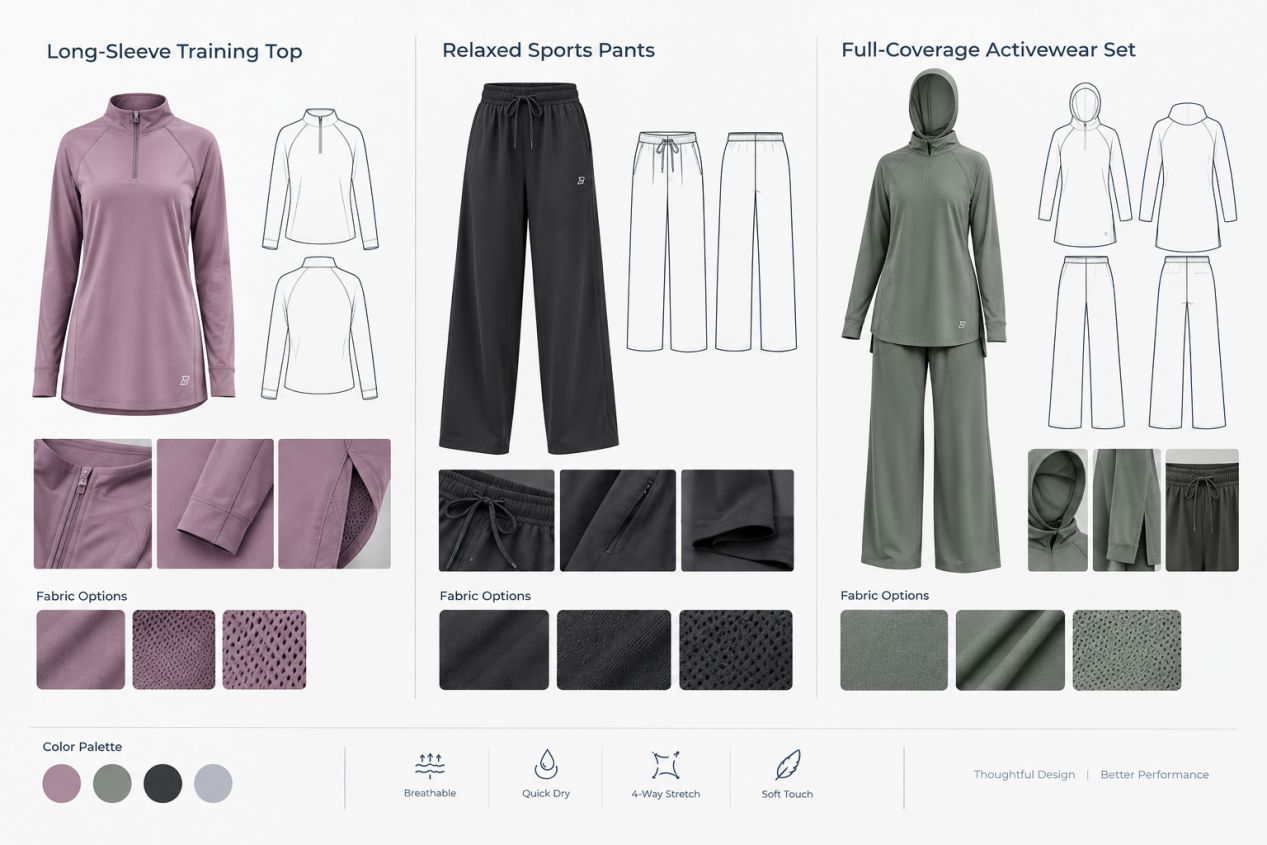
Different modest sportswear products have different development priorities.
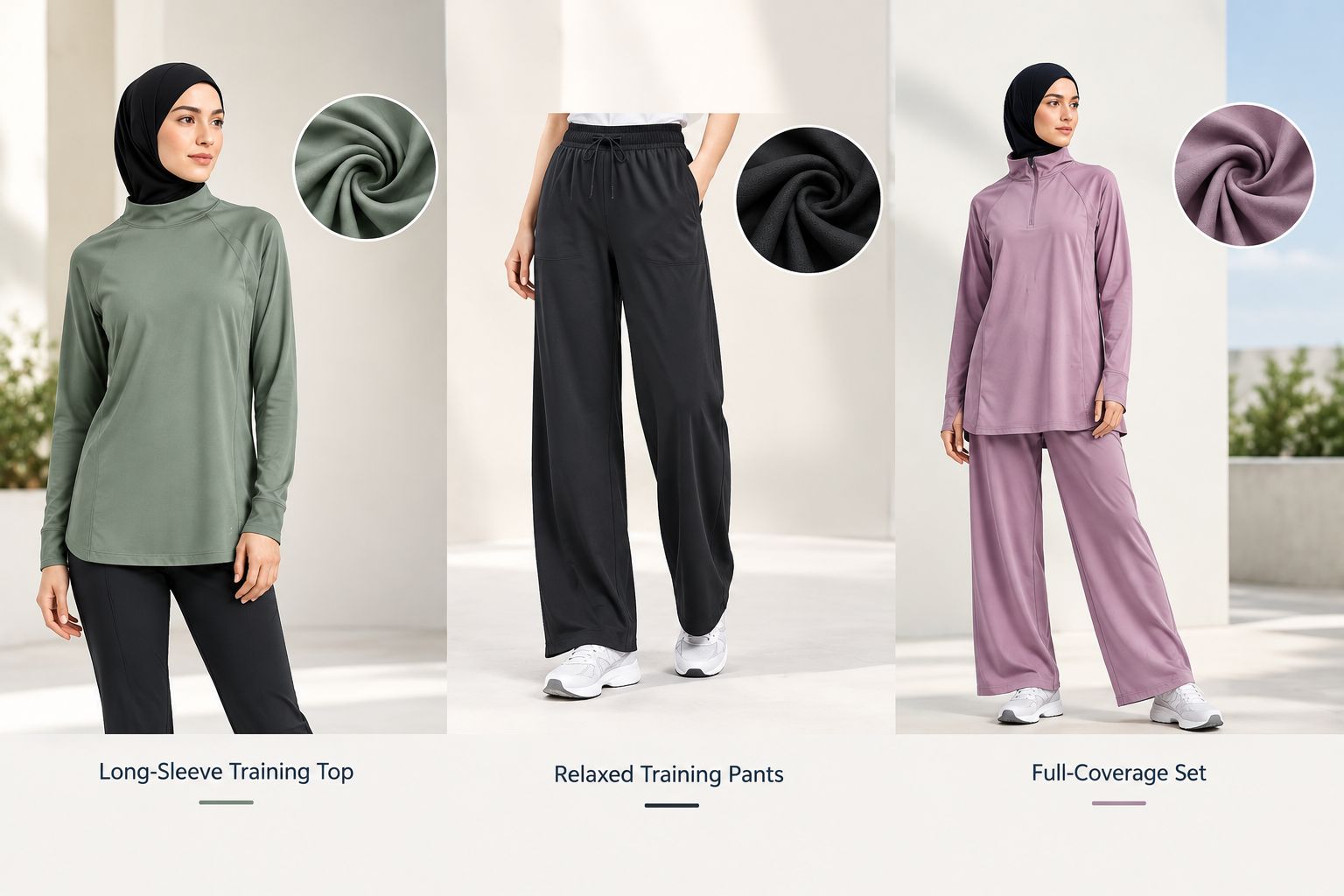
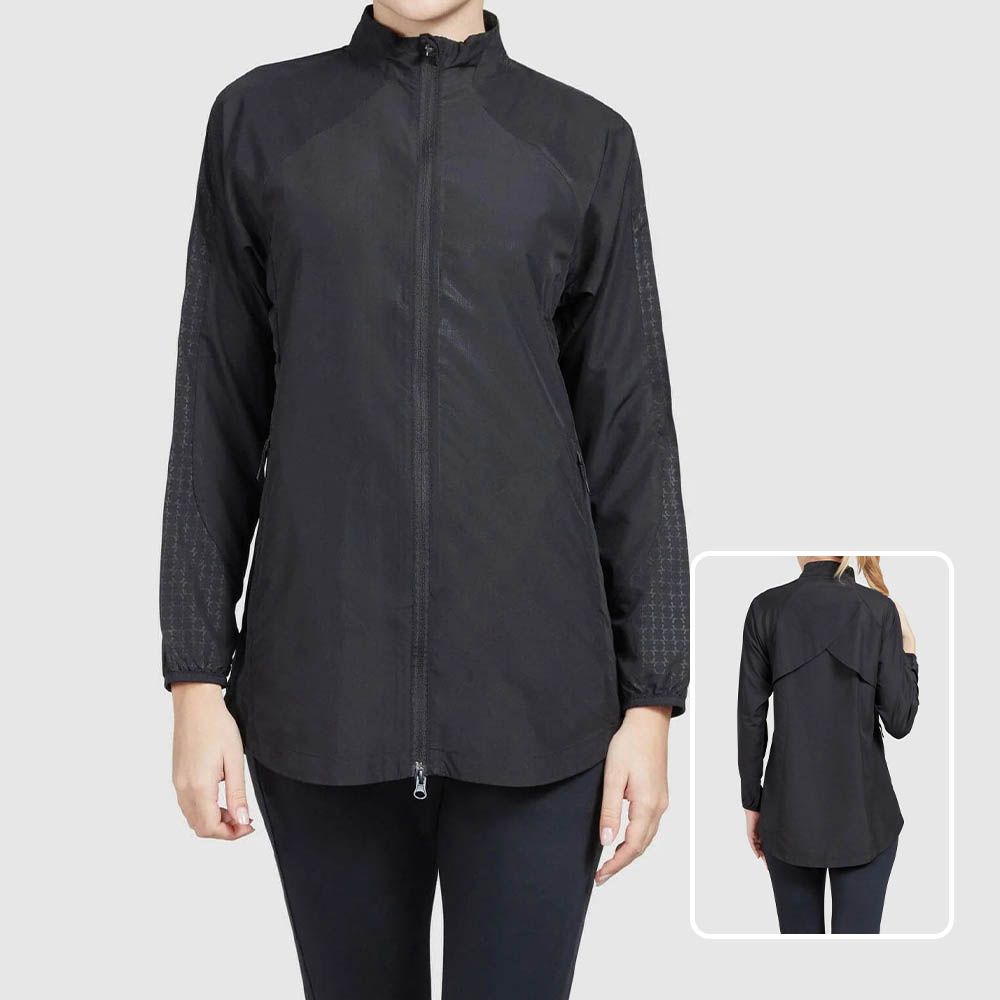
• Long-sleeve tops: Focus on shoulder coverage, comfortable arm movement, and suitable ventilation.
• Training pants: Check stride length, knee movement, waistband comfort, and excess fabric bulk.
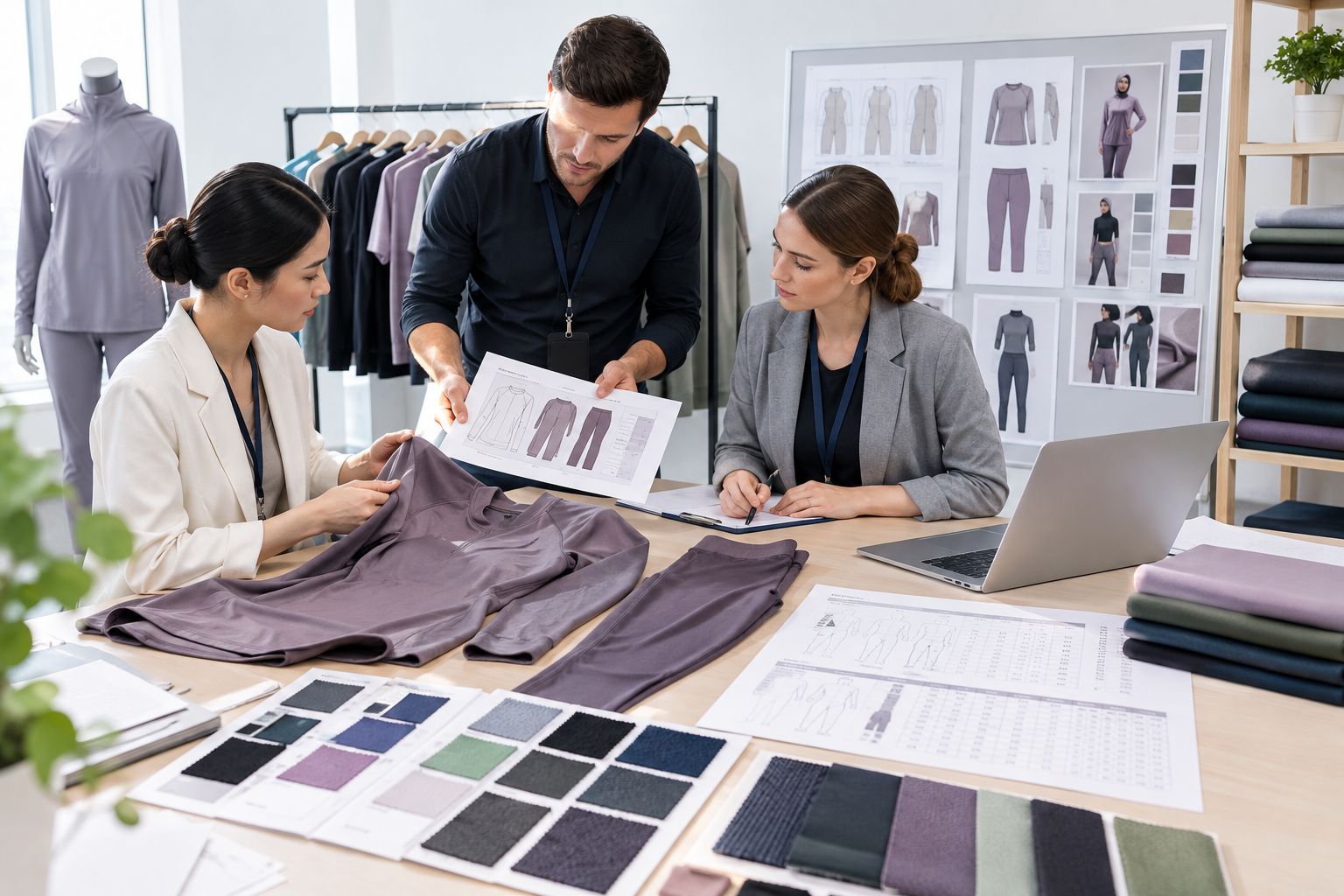
• Full-coverage sets: Coordinate colour and appearance while selecting suitable opacity, drape and performance for each garment. Tops and pants may require different fabrics or weights, so test the complete outfit together.
A fabric that works well for a fitted top may not provide the same drape or comfort in relaxed pants. Comparing materials alongside the intended pattern helps brands select more suitable options for each product.
Improve Airflow Without Compromising Coverage
Evaluate fabric air permeability and garment ventilation separately. Air permeability describes air passing through the fabric, while garment ventilation also depends on fit, openings and panel placement. Where ventilation panels or underarm details are used, check their transparency and placement on the finished garment during movement. A more open structure should not compromise the coverage defined in the product brief.
Brands should also define the intended activity and wearing conditions. Indoor gym training and outdoor walking may require different choices in fit, ventilation and fabric construction. For hot-weather use, compare liquid moisture management, drying time and the way damp fabric clings to the body. Moisture-wicking alone does not establish cooling performance; temperature, humidity, airflow and the complete outfit should be considered during wear testing.
The goal is to improve comfort through thoughtful design rather than relying on exposed skin or reducing the intended coverage.
Test Opacity and Fit on Finished Samples
Fabric that appears opaque on a hanger may become more transparent when stretched. Colour, knit structure, lighting, and garment tension can all affect coverage.
During sample development, assess the actual garment under consistent lighting while bending, squatting, reaching and walking. Check transparency at the shoulders, hips and knees, as well as neckline movement, sleeve movement and hem lift. Include damp-condition checks where relevant, because wet fabric may change appearance or cling more closely to the body. Repeat key fit and coverage checks after washing according to the intended care instructions.
Testing the finished sample helps identify fit, opacity, and construction issues before bulk manufacturing begins.
Prepare for Your Target Market Before Bulk Production
The Middle East includes different climates, activities, and customer preferences. Brands should define whether their collection is intended for indoor fitness, outdoor exercise, or everyday athleisure before finalising materials and construction.
Before bulk production, document the approved fabric composition and GSM, garment measurements and tolerances, colour references, care instructions and required performance checks. Keep an approved reference sample and agree on acceptance criteria for fit, coverage, dimensional stability and workmanship. This gives the brand and manufacturer a shared basis for production checks.
Sansansunsports supports brands with fabric sourcing, customised development, sampling, and OEM and ODM activewear manufacturing. Its MDMD service model—Material, Design, Manufacture and Delivery—connects material selection, product development, manufacturing and delivery.
Frequently Asked Questions
What is important when developing modest activewear for hot weather?
Brands should balance coverage, breathability, opacity, comfortable movement, and the intended use of each garment. The right combination depends on the design and target climate.
How can modest gym wear remain comfortable during exercise?
Appropriate pattern ease, suitable fabric stretch, comfortable construction, and well-planned ventilation can improve comfort without compromising coverage.
Should brands test modest activewear before bulk production?
Yes. Evaluate fit, opacity, movement and construction on finished samples. Where relevant, include damp-condition checks and repeat key measurements and coverage checks after washing. Agree on acceptance criteria before approving bulk production.
Conclusion
Successful modest activewear development depends on how fabric, pattern design, and garment construction work together. By testing coverage and movement on finished samples, brands can make more informed decisions before bulk production.
For brands developing modest gym wear for the Middle East and other warm-weather markets, Sansansunsports provides fabric sourcing, customised product development, sampling, and activewear manufacturing support to help turn product concepts into production-ready collections.
 Running Apparel Development: Fabrics, Features and Testing for Brands
 You May Also Like




 Tel
 WhatsApp
 Email
 Address
Room 202, No.130, Xianglong Street, Lubian, Chashan Town, Dongguan city, Guangdong Province


 Request a Custom Quote