
 Inquire(

 HOME
Indoor Gym vs Outdoor Running: How to Choose the Right Activewear Fabrics
 2026-10-21

 Sansansun
Indoor Gym vs Outdoor Running: How to Choose the Right Activewear Fabrics
Should activewear brands use the same fabric for gym training and outdoor running? Not always. Indoor workouts and outdoor exercise create different performance demands. The right fabric should match the activity, climate, and customer's needs.
For growing activewear brands, choosing suitable materials can improve comfort, product performance, and customer satisfaction. Whether you are developing training tops for the US and Europe or lightweight running shirts for hot Middle Eastern climates, fabric selection should be part of your product development strategy.
Indoor Gym vs Outdoor Running: What Is the Difference?
Both indoor gym training and outdoor running require comfortable movement, moisture management and suitable ventilation. The priorities depend on the workout: strength training may place greater demands on stretch recovery and resistance to contact with equipment, while high-intensity indoor exercise may also require lightweight, fast-drying fabrics. Outdoor running adds exposure to temperature, humidity, wind and sun, depending on the route and season.
|
Feature |
Indoor Gym Wear |
Outdoor Running Wear |
|
Development brief |
Define strength, cardio or mixed training |
Define distance, intensity, season and route |
|
Shared needs |
Comfortable movement, moisture management and ventilation |
Comfortable movement, moisture management and ventilation |
|
Additional checks |
Equipment contact, stretch recovery and coverage where relevant |
Wind, sun, temperature changes and storage where relevant |
|
Fabric options |
Nylon or polyester constructions, with elastane where needed |
Nylon or polyester constructions, with elastane where needed |
|
Sample evaluation |
Test during the intended gym movements |
Test during running in the intended conditions |
These are general guidelines. A well-designed performance fabric can work for both activities if it meets the required performance standards.
Which Fabrics Work Best for Training Tops and Running Shirts?
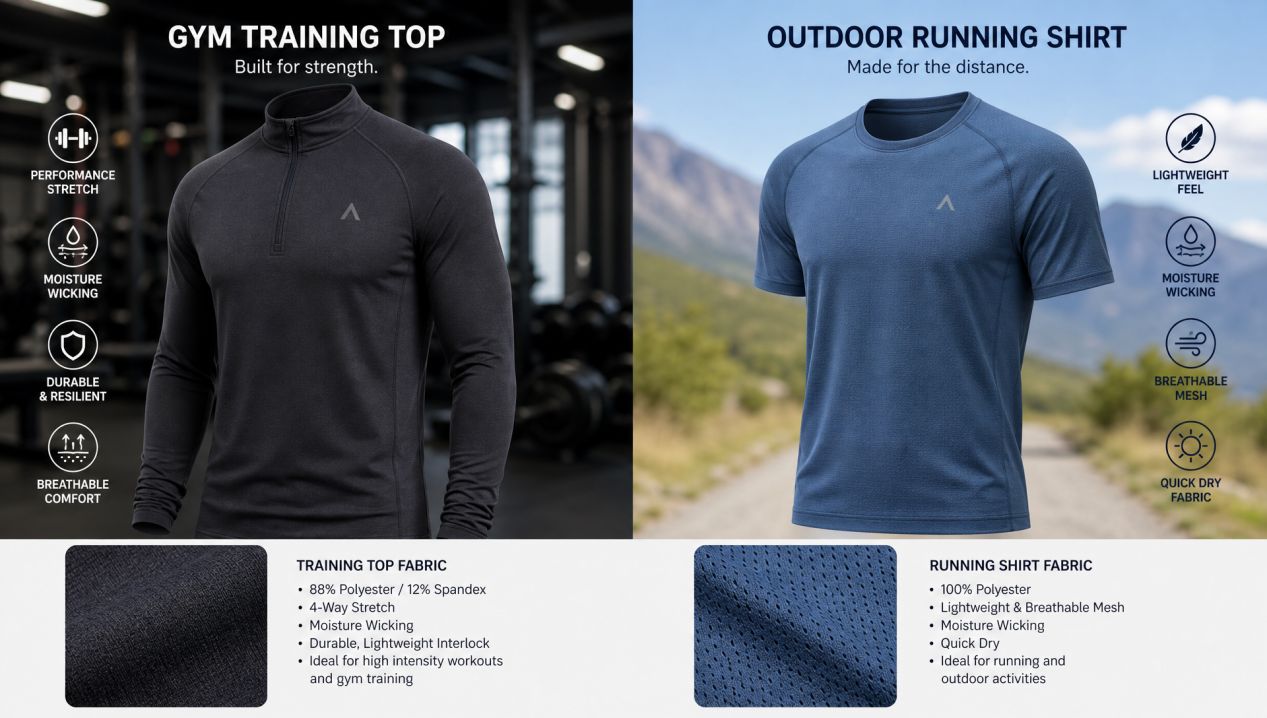
Nylon, polyester, and elastane are common choices for activewear, but each serves a different purpose.
Nylon and polyester can both be developed into fabrics for training tops and running shirts. Nylon fabrics may offer a smooth hand feel, while lightweight polyester constructions are commonly considered for running apparel. However, softness, durability, moisture management and drying speed depend on yarn, fabric construction and finishing as well as fiber type. Elastane can add stretch, but stretch recovery and garment comfort should be evaluated on the actual fabric and finished sample.
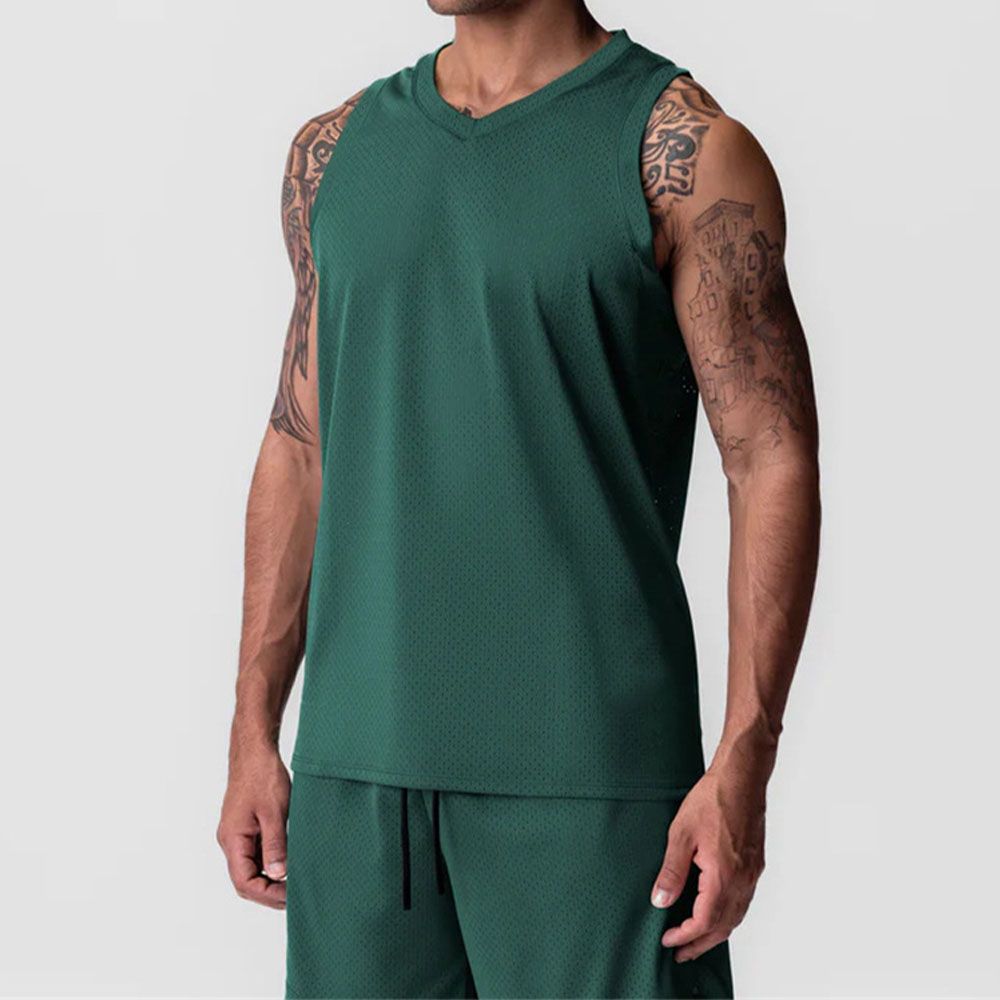
Fabric construction also matters. Mesh panels can improve airflow, while stretch knits can provide flexibility during strength training and stretching.
How Does Climate Affect Activewear Fabric Selection?
Climate is an important consideration for international activewear brands.
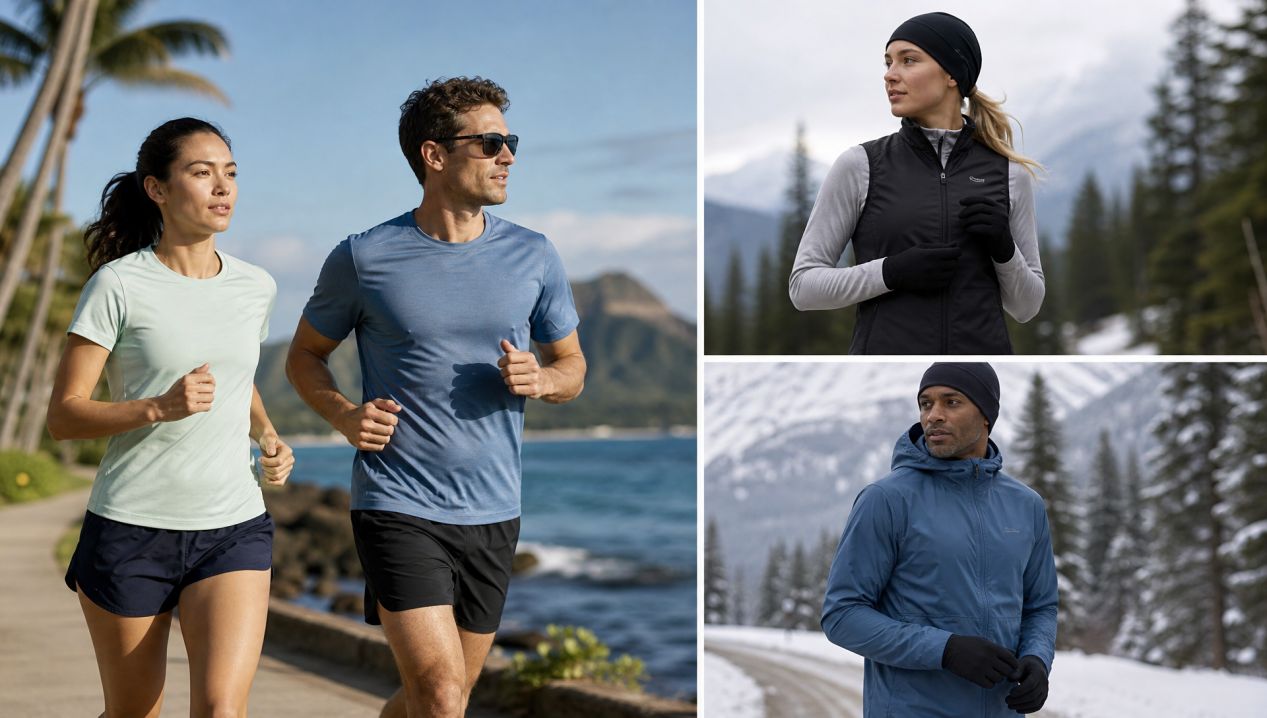
Define the expected temperature, humidity, wind and sun exposure for the intended season and location rather than selecting fabrics by region alone. For hot-weather exercise, evaluate fabric weight, moisture management, drying behavior and garment ventilation together. In humid conditions, moisture-wicking alone does not guarantee effective evaporative cooling. For cooler or variable conditions, consider layering and the balance between weather protection and ventilation.
Brands should also consider the season, workout intensity, and whether customers exercise indoors or outdoors. UV protection or wind resistance should only be claimed when the finished fabric or garment has been appropriately tested.
Can One Fabric Work for Both Gym Training and Running?
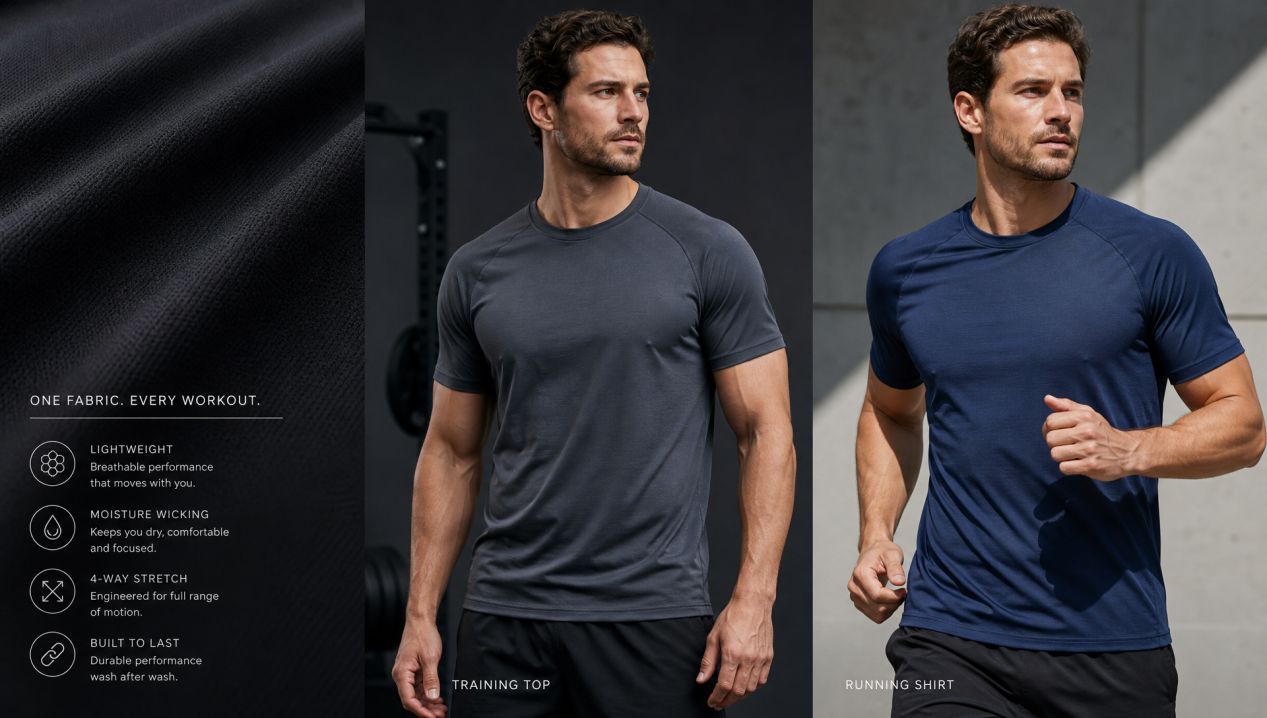
Yes. One fabric may serve both gym training and recreational running if it meets the requirements of each garment. However, suitability should not be assumed from fabric weight or compression alone. A dense construction may provide coverage but limit airflow, while a lighter construction may need additional checks for opacity and durability. Evaluate the fabric with the intended fit, activity and wearing conditions.
Before using one material across several product categories, check GSM, stretch recovery, air permeability, moisture management and drying behavior. Assess opacity under the intended stretch, seam comfort and garment movement on finished samples. Include wash checks for dimensional stability and appearance, and assess pilling or abrasion where contact with equipment is expected. Use consistent test conditions when comparing fabric options.
For growing brands, selecting versatile fabrics can simplify product development, but performance should always be confirmed through sampling and testing.
Frequently Asked Questions
Is polyester or nylon better for gym and running clothes?
Neither is always better. Polyester is widely used for lightweight running shirts, while nylon is popular for its smooth feel and durability. Fabric construction and testing determine the final performance.
What GSM is suitable for gym tops and running shirts?
There is no single ideal GSM for either category. Both gym tops and running shirts can use lightweight fabrics, depending on the activity and design. Compare weight alongside opacity, air permeability, durability and fit. GSM alone does not establish cooling, support or overall comfort.
Should brands develop separate gym and running collections?
Not necessarily. Some fabrics can serve both activities, but each garment should meet its intended performance requirements.
Conclusion
Indoor gym wear and outdoor running apparel share important needs, including comfort, breathability, and moisture management. However, the ideal fabric can differ according to exercise intensity, climate, and garment design.
For growing activewear brands, the best approach is to match fabric performance to the product's purpose and test materials before bulk production. Sansansunsports supports brands with fabric sourcing, customized development, sampling, and manufacturing solutions to help turn product concepts into performance-ready activewear.
 How to Develop Modest Activewear for Hot Climates
 You May Also Like




 Tel
 WhatsApp
 Email
 Address
Room 202, No.130, Xianglong Street, Lubian, Chashan Town, Dongguan city, Guangdong Province


 Request a Custom Quote