
 Inquire(

 HOME
Men's Compression Wear: Fabric, Fit & Design Guide
 2026-10-26

 Sansansun
Men's Compression Wear: Fabric, Fit & Design Guide
Why do some men's compression shirts feel supportive and comfortable, while others become restrictive during exercise?
The difference is not simply how tight the garment fits. Fabric stretch, pattern construction, pressure distribution, and seam placement all affect the wearing experience.
For activewear brands developing men's compression wear, understanding these details can help reduce fitting problems and improve product consistency.
Whether targeting gym users in the USA, runners in Europe, or fitness customers in Dubai and Saudi Arabia, brands should develop compression clothing around real training needs.
What Makes Good Men's Compression Wear?
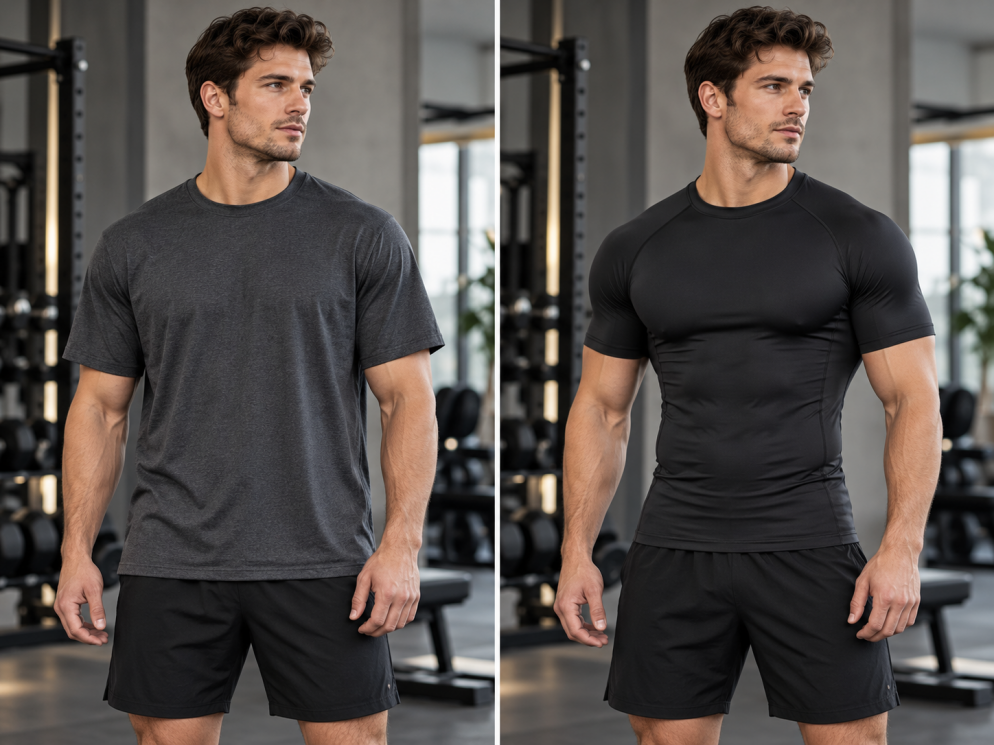
Men's compression wear is designed to fit closely against the body and apply a degree of pressure through elastic fabric and garment construction.
Unlike regular gymwear, compression clothing requires careful control of fabric resistance and garment measurements.
A well-developed collection should balance three priorities:
• Supportive fit: Close contact without unnecessary restriction.
• Movement flexibility: Comfortable stretching during running, lifting, and training.
• Long-term durability: Reliable stretch recovery after repeated wear and washing.
However, not every tight-fitting garment provides a measured or consistent compression level.
Best Fabrics for Men's Compression Shirts and Leggings
Choosing the right fabric is one of the most important decisions when developing compression sportswear.
Two common fiber blends are nylon-elastane and polyester-elastane. Engineered seamless knitting is a separate construction choice that can use different yarn blends; it should not be treated as a third fiber category.
|
Material or construction option |
Development considerations |
Potential applications |
|
Nylon-elastane blend |
Evaluate handfeel, stretch resistance, recovery and abrasion performance on the actual fabric |
Compression shirts and leggings |
|
Polyester-elastane blend |
Evaluate stretch resistance, recovery, moisture management and drying performance on the actual fabric |
Compression tops and leggings for running or gym training |
|
Engineered seamless construction |
Evaluate local knit structures, stretch behavior, fit and measured pressure where claimed |
Body-contoured tops, base layers and leggings |
Fabric composition alone does not determine performance.
Two fabrics containing similar percentages of elastane may produce different levels of resistance, recovery, and comfort.
For markets such as the UAE and Saudi Arabia, brands should pay particular attention to moisture management, fabric weight, and ventilation.
Why Compression Fit Depends on Pattern Engineering
One common development mistake is making a compression garment by simply reducing the measurements of a regular T-shirt or pair of leggings.
This approach can create excessive tension around certain body areas while leaving other sections loose.
Compression garment patterns must account for body measurements, fabric stretch characteristics, and the intended level of pressure.
For men's compression shirts, important areas include:
• Chest expansion during breathing
• Shoulder and arm rotation
• Underarm comfort
• Torso length and hem stability
For compression leggings, designers should focus on waist stability, crotch construction, thigh movement, and knee flexibility.
Different body sizes may also require adjustments to maintain consistent fit across the collection.
Stretch Zones: Where Compression Should Feel Different
Not every part of a compression garment needs the same fabric tension.
The goal is to support the intended fit while allowing natural body movement.
|
Body area |
Design priority |
|
Chest and shoulders |
Expansion and unrestricted rotation |
|
Abdomen |
Controlled fit without excessive pressure |
|
Thighs |
Comfortable movement during squats and running |
|
Knees |
Flexibility during repeated bending |
|
Waistband |
Secure positioning without rolling |
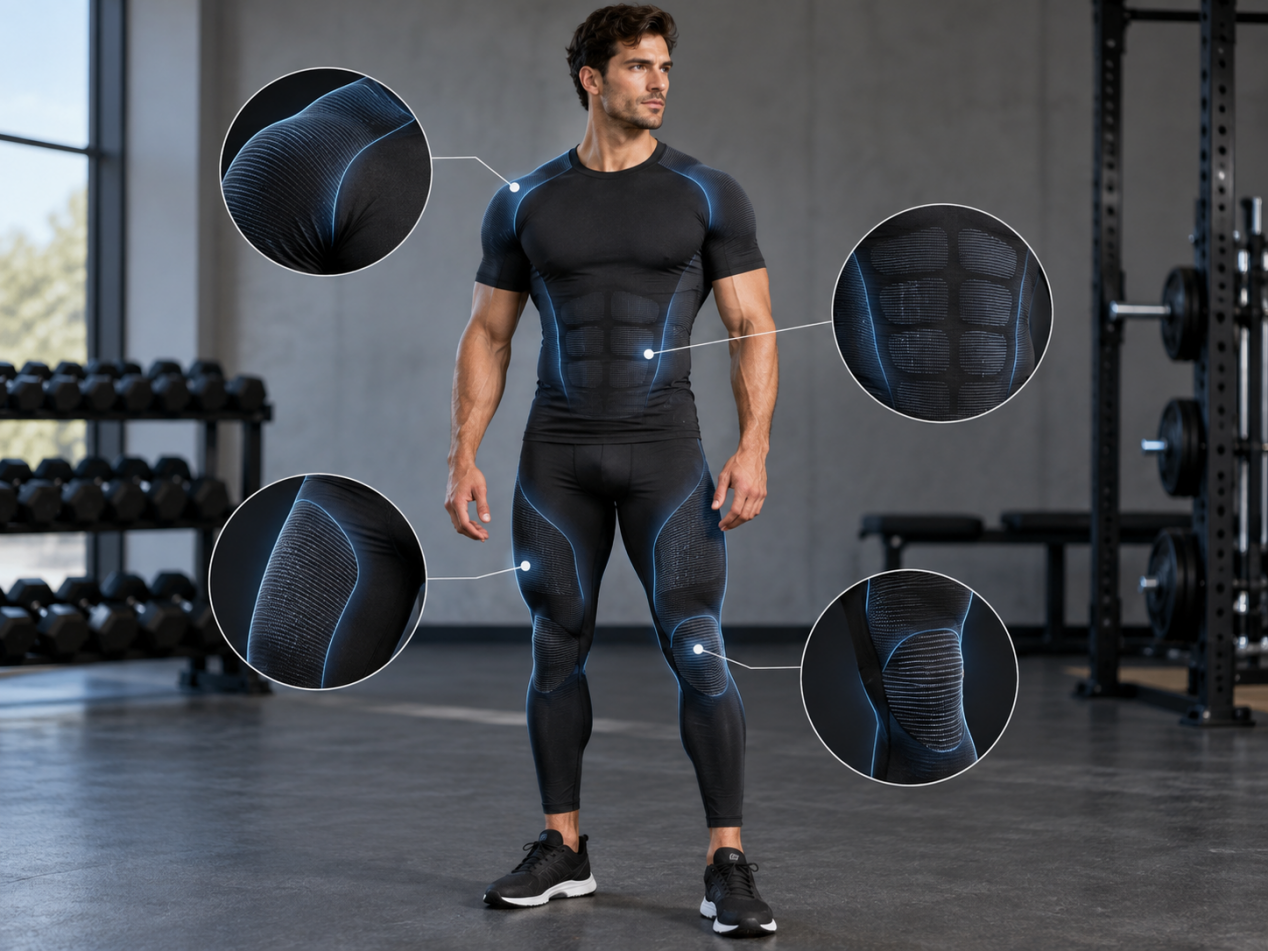
Brands can explore zoned knitting, fabric panel construction, or carefully engineered patterns to manage these differences.
However, visual compression zones alone do not prove that a garment delivers specific pressure levels. Those require measurement.
Flatlock vs Seamless: Which Construction Is Better?
Seam construction affects comfort, durability, and manufacturing choices.
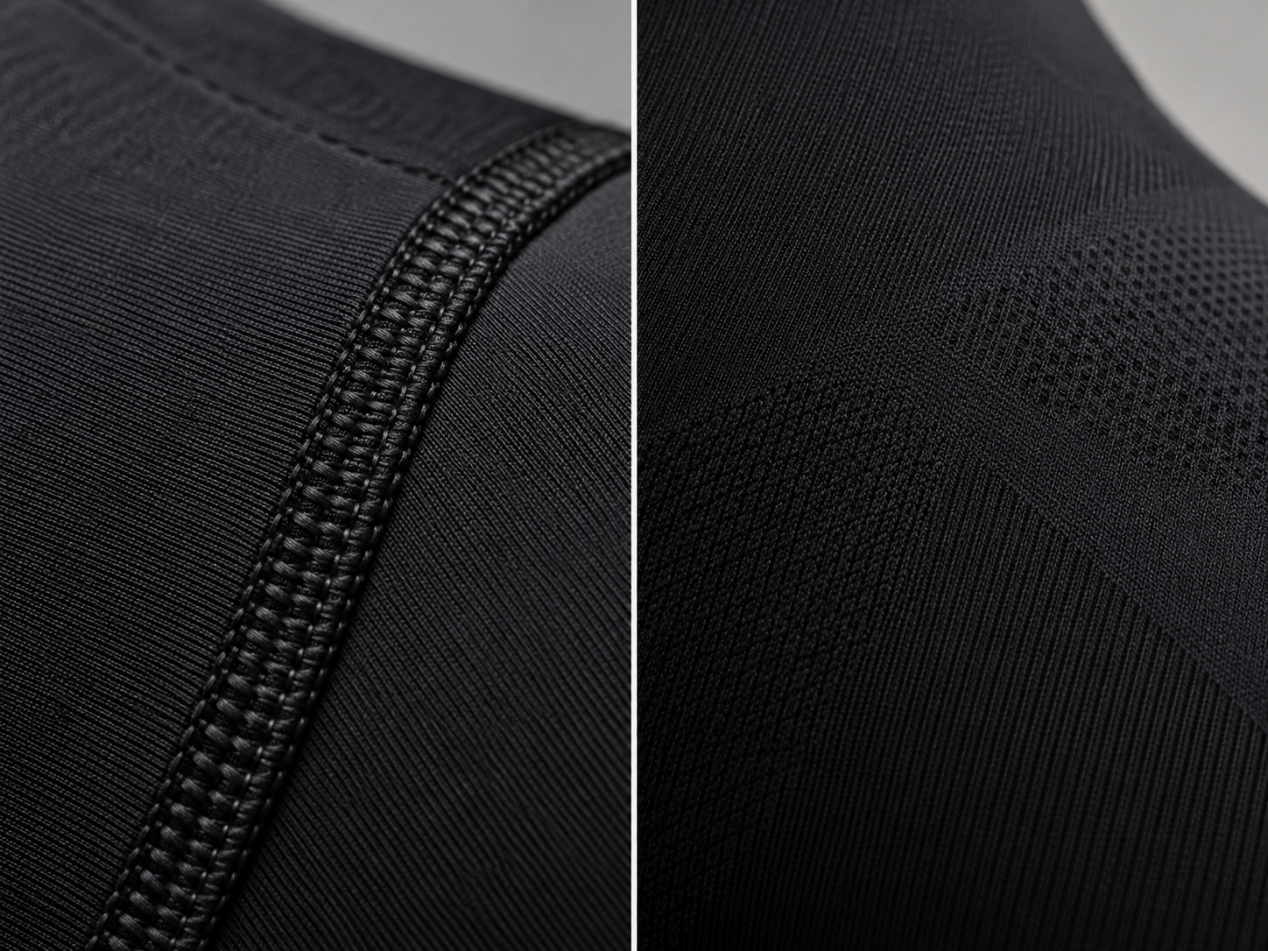
Flatlock construction can help create relatively flat seams, making it suitable for compression garments that experience frequent movement and fabric tension.
Seamless knitting can reduce certain sewn seams and support engineered knit zones.
Neither construction is automatically superior.
Brands should compare:
• Seam positioning around sensitive areas
• Stretch compatibility with the main fabric
• Friction during movement
• Seam strength after repeated stretching
• Production requirements and consistency
For running leggings or fitted training shirts, poor seam placement can create discomfort even when the fabric feels soft
Can Men's Compression Wear Help Athletic Recovery?
Compression clothing is frequently marketed for post-workout recovery. However, recovery claims require careful consideration.
Research findings on recovery are mixed. A 2022 systematic review and meta-analysis found no overall benefit for muscle strength recovery, while a 2025 review reported small benefits for strength and power recovery. These findings concern the garments, participants and exercise protocols studied; they do not establish that a particular men's compression shirt improves recovery.
Importantly, a garment designed for comfortable gym training is not automatically proven to improve recovery.
Brands developing recovery-focused collections should consider:
• Measuring actual garment pressure
• Defining the intended wearing conditions
• Evaluating relevant product-specific evidence
• Checking marketing claims against target-market requirements
For most general fitness collections, emphasizing verified fit, comfort, fabric performance, and construction quality provides a clearer starting point.
5 Tests Every Compression Wear Brand Should Complete
Before moving into bulk production, compression garments should be evaluated through more than a basic size check.
1. Fit testing
Check chest, waist, hip, thigh, and garment length measurements across representative sizes.
2. Movement testing
Evaluate performance during squats, lunges, running, stretching, and shoulder rotation.
3. Stretch recovery testing
Check whether fabric returns to its intended dimensions after repeated extension.
4. Pressure assessment
When a product claims a defined compression level or pressure profile, measure garment-to-body interface pressure at specified locations across representative sizes. Record garment size, wearer measurements, posture, measurement method and results in mmHg. Use consistent conditions when comparing samples, and assess whether the claimed pressure is maintained after the agreed wear and wash tests.
5. Washing and durability testing
Assess shrinkage, colorfastness, seam integrity, and changes in elasticity.
Testing should include multiple sizes because a compression design that works in medium may not deliver the same experience in XL.
How to Develop Custom Men's Compression Wear With a Manufacturer
For brand owners planning a private-label collection, the development process should begin with clear product requirements.
Define whether the collection is intended for strength training, running, general gym use, or a specific recovery-related application.
Next, select suitable fabrics and work with the manufacturer to develop patterns, samples, and fitting adjustments.
Before bulk production, confirm:
• Fabric composition and performance requirements
• Size specifications and target fit
• Compression expectations and testing methods
• Branding, labels, and packaging
• Sample approval and quality standards
At SANSANSUN SPORTS, we support international sportswear brands with OEM and ODM services, including fabric sourcing, pattern development, sampling and bulk production. Our MDMD service model—Material, Design, Manufacture and Delivery—connects these stages from material selection through delivery.
Our cut-and-sew and seamless manufacturing capabilities allow brands to explore different product constructions according to their design and order requirements.
Frequently Asked Questions
What is the best fabric for men's compression wear?
Nylon-elastane and polyester-elastane blends are common choices. The best option depends on intended use, stretch resistance, recovery, comfort, and durability requirements.
Is tighter compression always better?
No. Excessive tightness can restrict movement and reduce comfort. Appropriate tension depends on fabric properties, pattern design, and the garment's intended purpose.
What is the difference between compression wear and regular gymwear?
Regular gymwear may prioritize a relaxed or athletic fit, while compression clothing uses close-fitting construction and elastic resistance to apply pressure against the body.
Can compression garments be marketed for recovery?
Recovery-related claims require relevant supporting evidence. Brands should not assume that tight-fitting sportswear has proven physiological recovery benefits.
Conclusion
Developing high-quality men's compression wear requires more than selecting stretchy fabric.
The right combination of fabric performance, pattern engineering, controlled tension, and garment testing helps brands create products that fit their target customers.
For activewear brands entering the men's gymwear market, careful product development can also help prevent avoidable fitting and quality problems before production.
Planning your own men's compression wear collection?
Contact SANSANSUN SPORTS, your custom activewear manufacturer in China, to discuss fabric options, sample development, private labeling, and bulk manufacturing for your next collection
 Indoor Gym vs Outdoor Running: How to Choose the Right Activewear Fabrics
 You May Also Like




 Tel
 WhatsApp
 Email
 Address
Room 202, No.130, Xianglong Street, Lubian, Chashan Town, Dongguan city, Guangdong Province


 Request a Custom Quote