 Inquire(

 HOME
Cooling Activewear Fabrics: How Brands Should Choose and Test Them
 2026-10-08

 Sansansun
Cooling Activewear Fabrics: How Brands Should Choose and Test Them
Cooling activewear is not created by one fabric feature. A garment can feel cool when first touched but still become warm during exercise. Another fabric may not feel cold at first, yet provide better comfort because it allows airflow and helps sweat evaporate.
For growing activewear brands, especially those developing collections for warm markets such as Saudi Arabia, the UAE and the wider Middle East, it is important to understand what type of cooling is required, how it is created and how it should be tested.
Sansansunsports helps brands compare fabric composition, yarn, GSM, knit structure, moisture management and garment use before moving into sampling.
Three Different Types of Cooling Performance
Cooling should not be treated as one single function.
Contact cooling describes the cool sensation when fabric first touches the skin. It can be influenced by fiber, yarn and fabric construction. However, a cool first touch does not automatically mean the garment will provide sustained cooling during exercise.
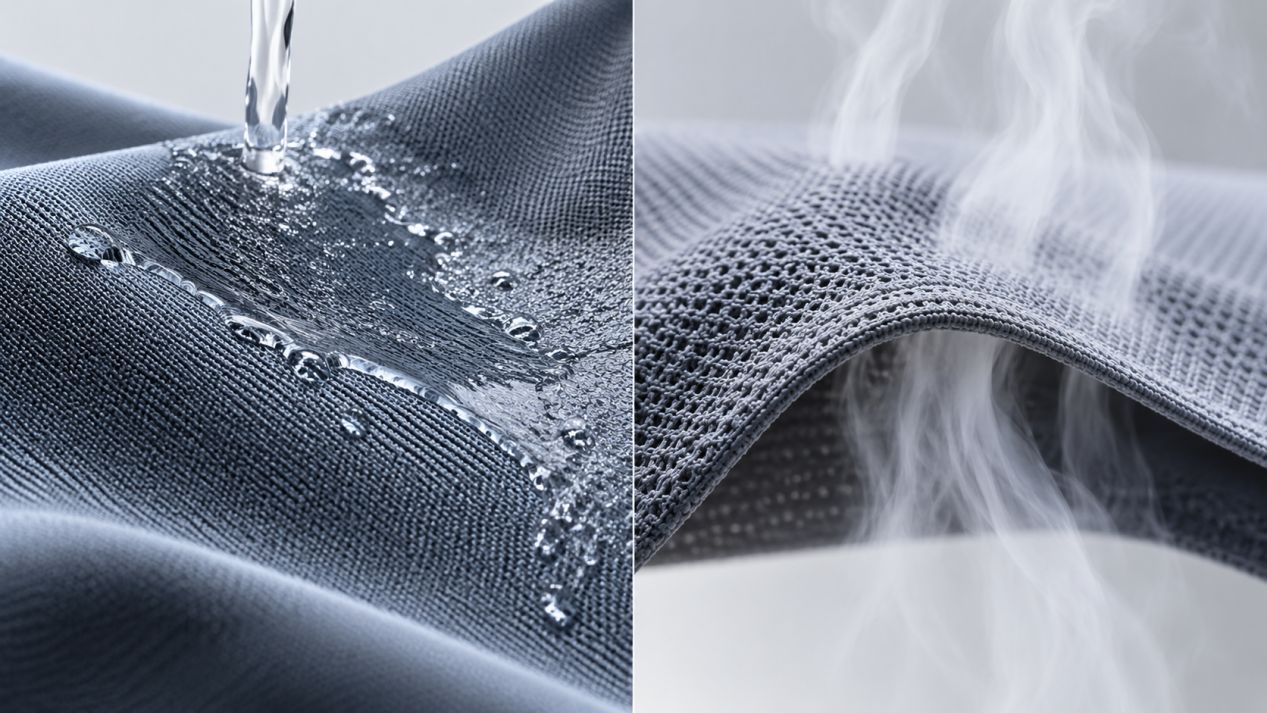
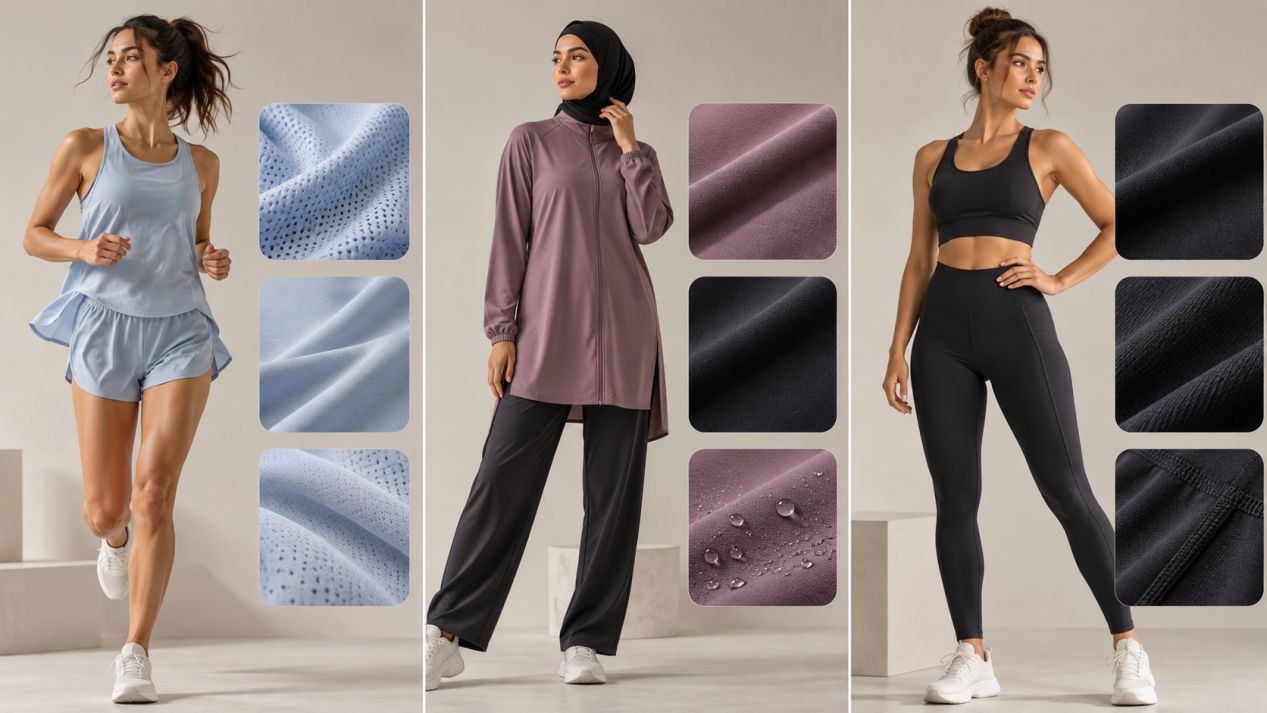
Ventilation can support thermal comfort by allowing air exchange through the fabric and garment openings. Open knit structures, mesh panels and engineered ventilation zones can help reduce heat and moisture buildup, but their effectiveness also depends on garment fit and surrounding conditions. Lightweight fabric alone does not guarantee good ventilation.
Evaporative cooling occurs when sweat evaporates and removes heat. Moisture-wicking can help move and spread liquid sweat, but it does not by itself guarantee a cooling effect. The result also depends on humidity, airflow, garment fit and fabric construction. Brands should evaluate moisture management and drying performance under conditions relevant to the intended activity.
Brands should therefore define which cooling effect they need before selecting a fabric.
Moisture-Wicking and Cooling Are Not the Same
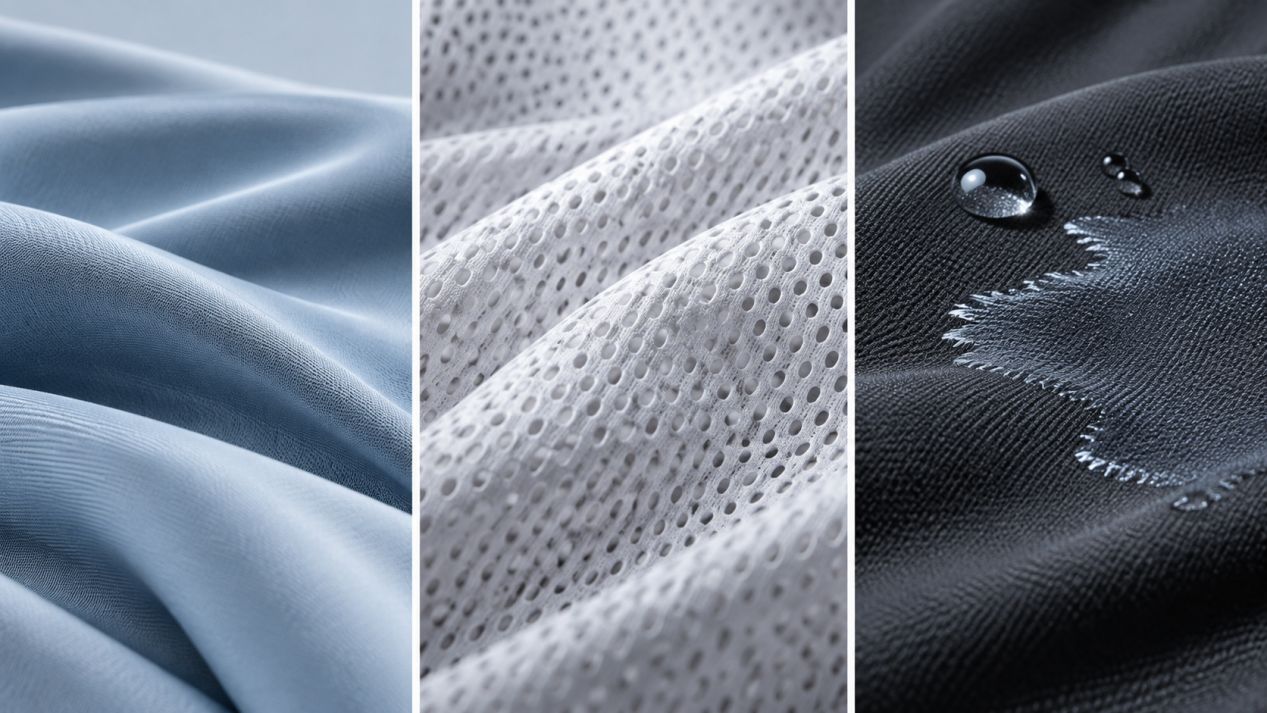
Moisture-wicking mainly describes how liquid sweat moves away from the skin and spreads through the fabric.
Cooling is broader. It may come from initial cool touch, airflow, sweat evaporation or a combination of these factors.
A fabric may have strong moisture management without feeling cool when first touched. Another may feel cool initially but provide limited ventilation during long training sessions.
For buyers, the question should be: Which cooling mechanism is important for this garment?
How GSM, Composition and Structure Affect Fabric Selection
There is no universal GSM that automatically creates a cooling fabric. The correct weight depends on the garment, composition, knitting structure, coverage and activity.
|
Fabric consideration |
Suitable use |
Main advantage |
Possible limitation |
|
Lightweight polyester /elastane knit |
Running tops, Training tees |
Quick drying and light feel |
Very light constructions |
|
Nylon/elastane Compact Knit |
Leggings, fitted gymwear |
Smooth feel, stretch and support |
Dense construction may reduce airflow |
|
Engineered mesh |
Back panels, underarms ventilation zones |
Higher airflow |
May not provide enough opacity for full garments |
|
Soft cellulosic blends |
Yoga, lifestyle and Low-Intensity wear |
Soft hand feel and comfort |
Performance depends strongly on construction and drying behavior |
GSM should always be checked on the actual fabric specification instead of choosing a fabric from a general range alone.
How Cooling Fabrics Should Be Tested
A supplier should not support a cooling claim only by saying that a fabric “feels cool.”
For development, brands can evaluate:
• initial cool-touch sensation;
• air permeability or breathability;
• moisture spreading and drying behavior;
• stretch and recovery;
• shrinkage;
• color fastness;
• opacity under stretch;
• performance after repeated washing.
For example, if a fabric is selected for a running top, the same sample should be checked before and after washing. The report should record the test item, test method, testing conditions and pre- and post-wash results.
Sansansunsports can work with fabric testing and third-party testing requirements during product development. Actual test values should come from the tested fabric or laboratory report rather than from a general marketing claim.
How Middle East Brands Can Choose Cooling Fabrics
For hot-climate markets, cooling performance should be balanced with coverage, comfort and garment purpose.
A running top may prioritize lightweight structure, airflow and fast drying. Leggings require stronger stretch, recovery and opacity. Modest activewear may require more coverage while still using breathable structures or strategically placed ventilation.
For brands targeting Saudi Arabia, the UAE and other GCC markets, requirements should be defined for the specific customer and activity. Where modest silhouettes or longer wearing periods are part of the product brief, coverage and thermal comfort should be evaluated together.
Frequently Asked Questions
Is a cool-to-touch fabric always better for exercise?
No. Contact cooling describes the first skin sensation. Long-term comfort also depends on airflow, moisture evaporation, garment fit and activity level.
What GSM is best for cooling activewear?
There is no single best GSM. Brands should compare the actual fabric's composition, structure, opacity, stretch and intended garment. GSM should come from the real fabric specification.
How can brands verify cooling performance?
Ask for actual test reports showing the method, conditions and results. For washable activewear, comparing performance before and after repeated washing is particularly useful.
Can Sansansunsports help develop cooling activewear?
Yes. Sansansunsports supports fabric sourcing, material comparison, custom development, sampling, fitting and bulk manufacturing through OEM, ODM and MDMD services. MDMD means Material, Design, Manufacture and Delivery.
Conclusion
The most important point for activewear brands is that cooling is not one single fabric property. Contact cooling, ventilation and evaporative cooling work differently and should be evaluated separately.
Growing brands should select fabrics according to the garment, climate and required function, then verify performance using actual fabric specifications and test results before bulk production.
For brands developing running, gym, tennis, yoga or modest activewear for warm markets, Sansansunsports can support the process from fabric evaluation to sampling and manufacturing.
Planning a cooling activewear collection for the Middle East or another warm-weather market? Contact Sansansunsports to discuss your fabric, performance and product requirements before starting your next sample development.
 Activewear Fabric Trends to Watch for 2027: A Material Planning Guide for Brands
 You May Also Like




 Tel
 WhatsApp
 Email
 Address
Room 202, No.130, Xianglong Street, Lubian, Chashan Town, Dongguan city, Guangdong Province


 Request a Custom Quote