
 Inquire(

 HOME
Activewear Fabric Trends to Watch for 2027: A Material Planning Guide for Brands
 2026-10-14

 Sansansun
Activewear Fabric Trends to Watch for 2027: A Material Planning Guide for Brands
For brands planning 2027 activewear collections, cooling performance, breathable construction, recycled fibers and lasting comfort are material-development areas worth evaluating. This guide presents practical planning considerations rather than confirmed predictions of 2027 demand. For collections intended for hot-weather use, including selected Middle Eastern markets, fabric choices should reflect the activity, wearing conditions and coverage requirements.
From Modal and TENCEL™ Lyocell to recycled nylon and lightweight performance knits, new fabric applications offer opportunities for activewear brands. Understanding their properties, limitations, and manufacturing requirements helps buyers develop better collections.
What Should Guide Material Planning for 2027?
Modern activewear must balance comfort, movement, durability, and responsible material selection. Fabric performance increasingly depends on fiber quality, yarn technology, knit construction, and finishing processes.
According to the Textile Exchange Materials Market Report 2026, global fiber production reached approximately 139 million tonnes in 2025, while textile-to-textile recycled fibers represented only 0.76% of total production.
These figures describe the wider fiber market; they do not establish which activewear fabrics will gain demand in 2027. For brands, they provide sourcing context and a reason to examine material origins and recycled-content claims carefully. Collection decisions should combine this context with customer needs, verified fabric performance and product suitability.
Cooling and Breathable Fabrics for Hot Climates
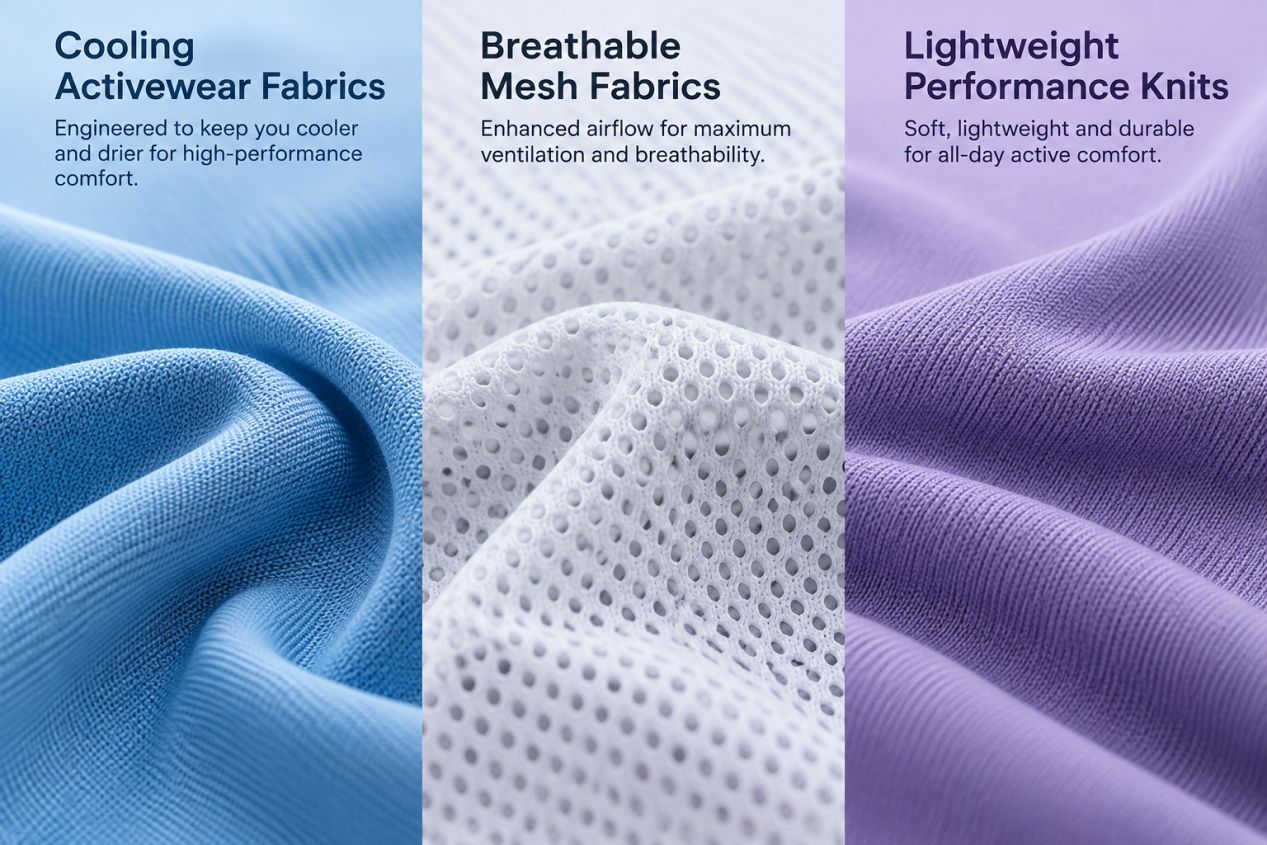
Cooling activewear fabrics are particularly relevant for sportswear collections designed for Dubai, Riyadh, Doha, and other warm-weather markets.
Lightweight polyester and nylon-elastane fabrics can provide effective moisture management when engineered with suitable yarns and knit structures. Breathable mesh panels and ventilation zones can further improve airflow.
However, cooling, breathability, and moisture-wicking are different performance properties:
- Cooling-touch: Creates an initial cool sensation against the skin.
- Air permeability: Describes how readily air passes through the fabric.
- Water-vapor transfer: Describes how water vapor moves through the fabric. It should be assessed separately from air permeability.
- Breathability: Allows air and water vapor to move through the fabric.
- Moisture-wicking: Describes liquid sweat moving through or across the fabric. Its contribution to evaporative cooling depends on drying conditions, including humidity and airflow.
- Quick-drying: Helps reduce moisture retention after exercise.
For running shirts and gymwear, brands should test drying speed, airflow, and comfort under realistic wearing conditions. Fabric weight alone cannot determine cooling performance.
Modal and TENCEL™ Lyocell for Comfort-Focused Activewear
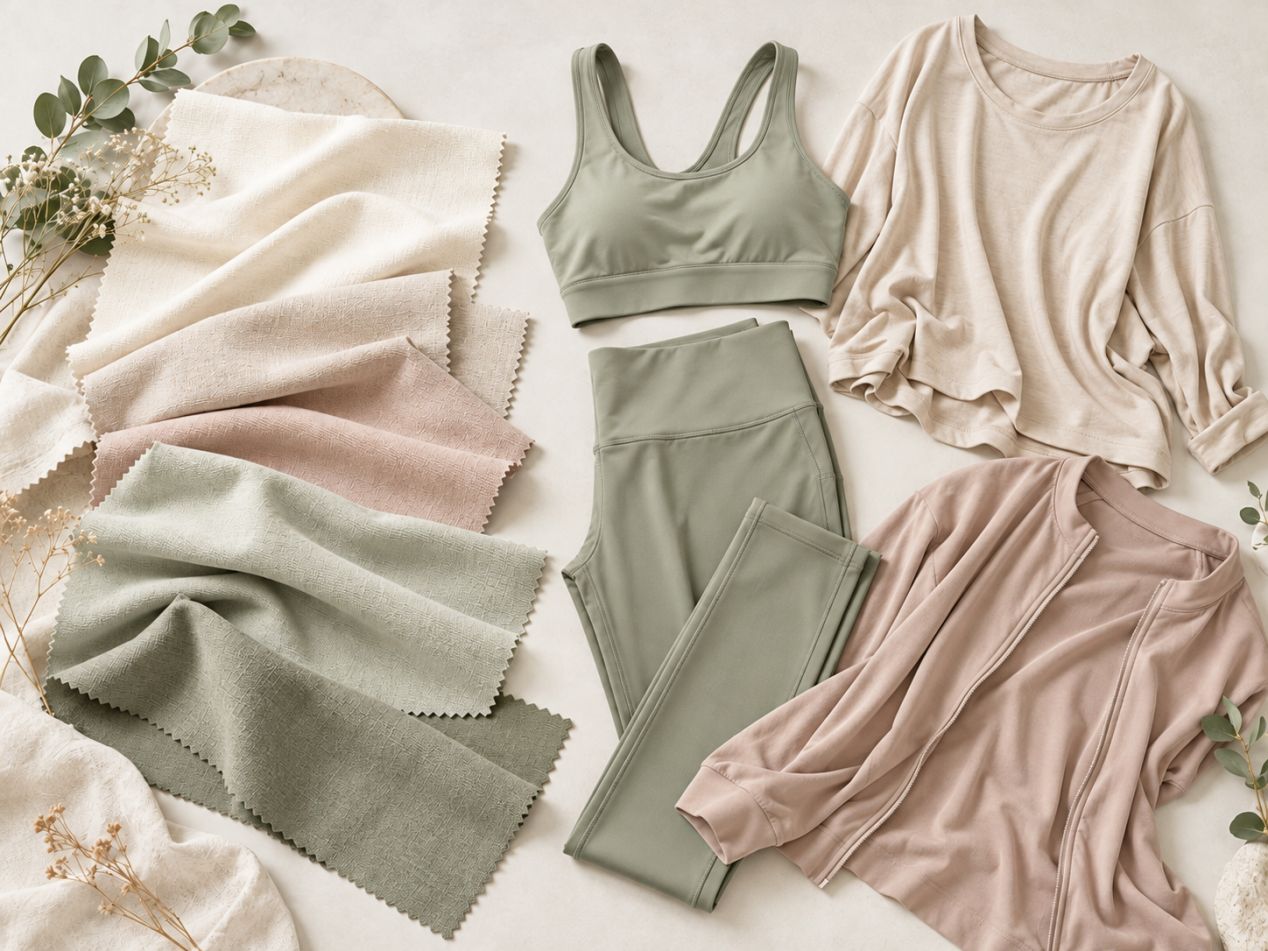
Modal and TENCEL™ Lyocell are worth considering for brands developing premium yoga, lifestyle, and low-intensity activewear collections.
Modal is known for its smooth, soft hand feel, making it suitable for yoga tops, relaxed training sets, and everyday sportswear. Lyocell provides moisture absorption and comfortable next-to-skin wear.
Both are regenerated cellulosic fibers, but their performance depends on the specific fiber, fabric blend, and construction. TENCEL™ is a branded fiber portfolio from Lenzing, not a separate generic fiber type.
When blended with elastane, these materials can provide flexibility for selected activewear applications.
For Middle Eastern markets, brands may consider these fabrics for lightweight lifestyle collections. However, stretch recovery, drying speed, and wash durability should be tested before bulk manufacturing.
Recycled Fabrics and Responsible Activewear Manufacturing
Recycled polyester and recycled nylon remain important material options for brands seeking to reduce their dependence on virgin synthetic fibers.
Recycled polyester can be developed for training shirts and running apparel, while recycled nylon-elastane blends are commonly considered for leggings and sports bras.
However, recycled content does not automatically mean a fabric has a lower overall environmental impact. The material's source, processing, durability, and end-of-life considerations also matter.
The Textile Exchange report shows that approximately 97% of recycled polyester produced in 2025 came from plastic bottles rather than recycled textiles.
Brands should therefore request appropriate material documentation and verify recycled-content claims through relevant certification systems, such as the Global Recycled Standard (GRS) or Recycled Claim Standard (RCS), where applicable.
Modest Activewear Fabrics for Middle Eastern Markets
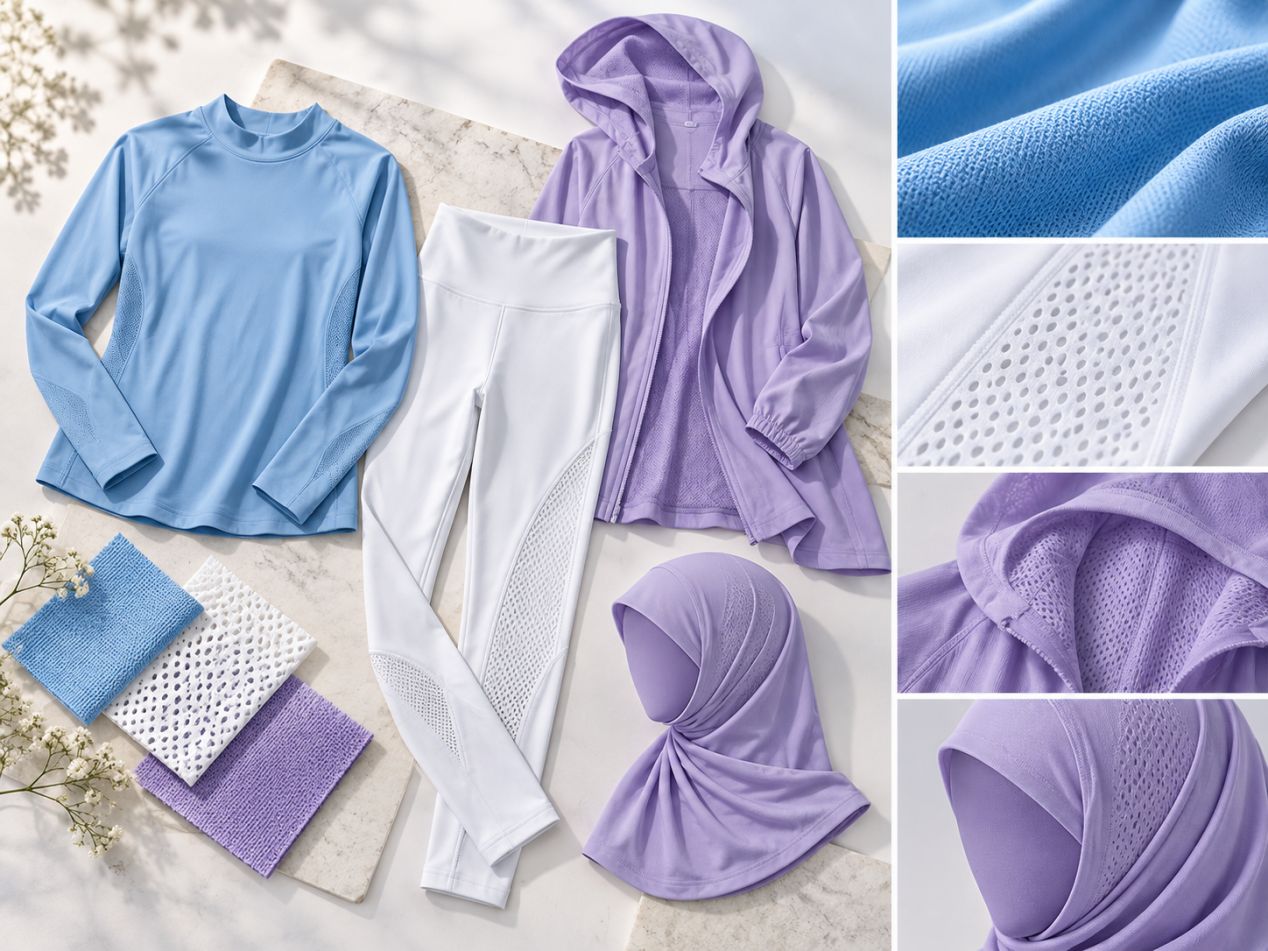
Modest activewear requires careful fabric selection because garments often provide additional coverage while still needing breathability and freedom of movement.
For indoor training, prioritize the intended activity, fit and comfort. For outdoor use, also consider temperature, humidity, sun exposure and wearing duration. These requirements vary by season and customer segment across Saudi Arabia, the UAE, Qatar and other markets.
For the UAE, versatile fabrics suitable for indoor gyms and warm-weather outdoor activities may be useful. In Qatar, moisture management, sun exposure, and breathable construction are important considerations for outdoor sportswear development.
Regardless of the regional market, brands should evaluate opacity, stretch, fabric weight, and airflow.
A lightweight material is not always sufficiently opaque, while a heavier fabric may restrict comfort during warm-weather training.
How Can Brands Choose the Right Activewear Fabrics for 2027?
The best activewear fabric depends on the garment's intended activity, target customers, and regional climate.
For high-intensity workouts, moisture management and stretch recovery are important. For yoga and lifestyle collections, softness and comfort may take priority. For modest activewear in hot climates, brands need to balance coverage, ventilation, and garment weight.
The following comparison provides a starting point for material selection:
|
Fabric type |
Main advantage |
Suitable applications |
|
Nylon–elastane |
Stretch and recovery |
Leggings, sports bras |
|
Polyester performance knit |
Quick-drying potential |
Running shirts, gymwear |
|
Modal blends |
Soft, smooth comfort |
Yoga and lifestyle wear |
|
TENCEL™ Lyocell blends |
Moisture absorption |
Low-intensity activewear |
|
Recycled nylon blends |
Performance with recycled content |
Premium fitted sportswear |
|
Engineered mesh |
Improved ventilation |
Running tops, ventilation panels |
The table identifies possible applications, not guaranteed performance. Actual results depend on fiber blends, yarn, GSM, construction and finishing. For fitted nylon-elastane fabrics, check stretch recovery and opacity. For performance polyester and mesh, assess drying behavior, airflow and coverage. For Modal and Lyocell blends, check drying time, dimensional stability and wash durability. For recycled materials, also verify the claimed content and supporting documentation. Evaluate physical samples and finished garments before approving bulk production.
Frequently Asked Questions
What are the main activewear fabric trends for 2027?
Areas worth evaluating for 2027 collections include cooling-oriented fabrics, breathable constructions, verified recycled materials, comfort-focused Modal and Lyocell blends, and durability. These are planning considerations, not confirmed forecasts of market demand. Brands should prioritize them according to customer needs and tested product performance.
Which fabric is best for activewear in Middle Eastern climates?
Lightweight, breathable fabrics with effective moisture management are useful for hot climates. However, the ideal material depends on garment coverage, activity level, opacity, and intended use.
Is Modal better than polyester for activewear?
Neither material is universally better. Modal blends are suitable for comfort-focused yoga and lifestyle clothing, while engineered polyester fabrics can offer effective moisture management and quick drying for intensive workouts.
Conclusion
When planning 2027 activewear collections, brands should evaluate breathable construction, material traceability, moisture management and lasting comfort against their product requirements. These considerations provide a development framework rather than a prediction of which fabrics will dominate the market.
For brands targeting Middle Eastern markets, successful fabric selection also requires attention to hot-weather performance, coverage requirements, and garment functionality.
From cooling performance knits to Modal, TENCEL™ Lyocell, and recycled fibers, every material offers different advantages. Selecting the right combination of fiber composition, GSM, stretch recovery, and construction helps brands build collections suited to their customers.
As a China-based activewear manufacturer, Sansansunsports provides OEM and ODM services, along with its MDMD service model—Material, Design, Manufacture and Delivery. These services support brands with fabric sourcing, custom design, sampling, quality control and bulk production.
Planning your 2027 activewear collection? Contact Sansansunsports to explore premium fabric options and develop customized sportswear for your target market.
 Cooling Activewear Fabrics: How Brands Should Choose and Test Them
 You May Also Like




 Tel
 WhatsApp
 Email
 Address
Room 202, No.130, Xianglong Street, Lubian, Chashan Town, Dongguan city, Guangdong Province


 Request a Custom Quote