
 Inquire(
 HOME
HOMEActivewear Fabric Performance: Fiber, Yarn, Knit Structure and Finishes Explained
 2026-10-08

 Sansansun
Activewear Fabric Performance: Fiber, Yarn, Knit Structure and Finishes Explained
Two activewear fabrics can show the same composition on a label but behave very differently in real use. A “75% nylon, 25% elastane” fabric may feel soft and flexible, while another with the same composition may feel firmer, warmer or more compressive.
The reason is simple: activewear performance comes from the whole fabric system. Fiber, yarn construction, knit structure, GSM and finishing all influence the final garment. For growing activewear brands, understanding these factors before sampling can reduce development mistakes and create more consistent products.
At Sansansunsports, we evaluate fabrics according to the garment, activity, target fit and required performance—not composition alone.
Why Fabric Composition Alone Cannot Tell You How Activewear Will Perform
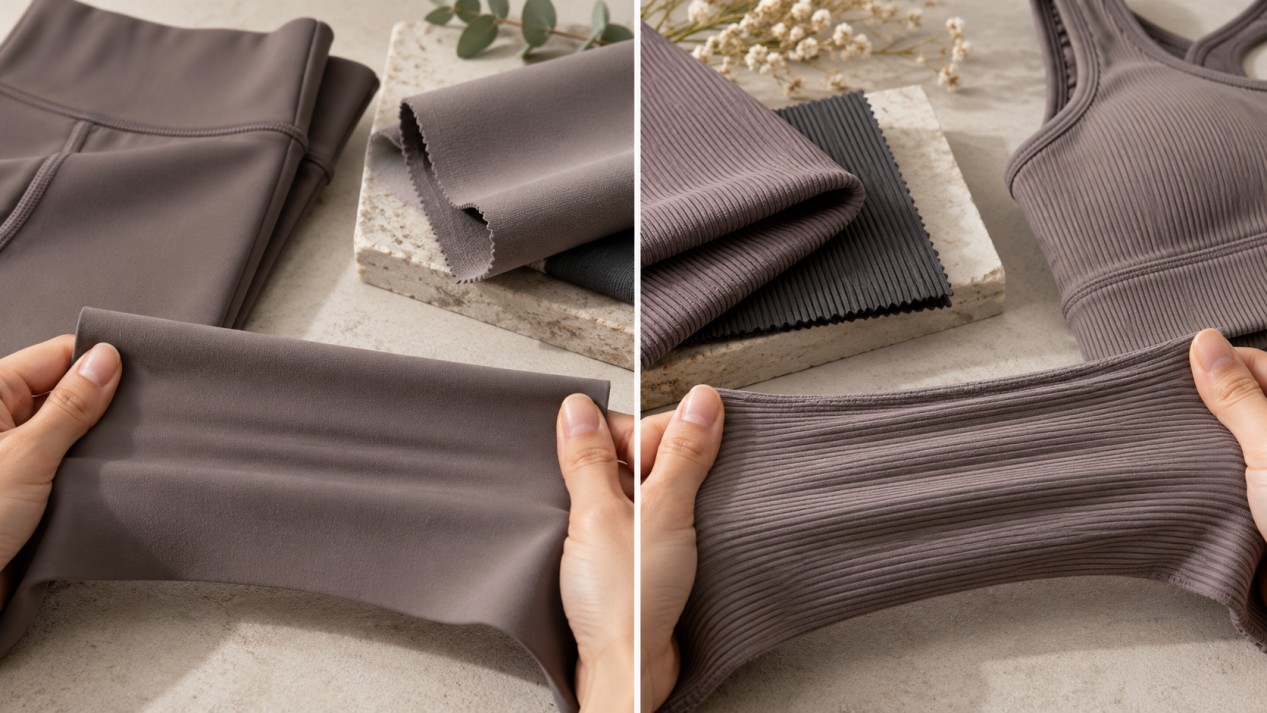
Composition tells buyers what fibers are present, but it does not fully explain breathability, stretch recovery, opacity or moisture management.
For example, two nylon-elastane fabrics may use different yarn thicknesses, knitting densities or finishing processes. One may work well for yoga leggings, while another is more suitable for supportive gymwear.
|
Performance Source |
Main Function |
Typical Application |
How to verify |
|
Fiber |
Basic softness, strength |
Yoga, lifestyle, training |
Fiber and fabric testing |
|
Yarn |
Influences hand feel and moisture movement |
Leggings, tops, seamless wear |
Stretch and recovery test |
|
Knit structure |
Controls airflow, coverage and support |
Bras, leggings, mesh zones |
Breathability and opacity tests |
|
Finishing |
Adds specific function |
Cooling, wicking, water resistance |
Function and wash Testing |
How Yarn Engineering Can Add Performance From the Inside
Performance can begin at yarn level. Filament size, yarn shape and texture can influence softness, airflow, moisture movement and stretch.
This is why buyers should ask not only “What is the composition?” but also “How is the fabric constructed?”
Why Knit Structure Changes Breathability, Cooling and Moisture Management
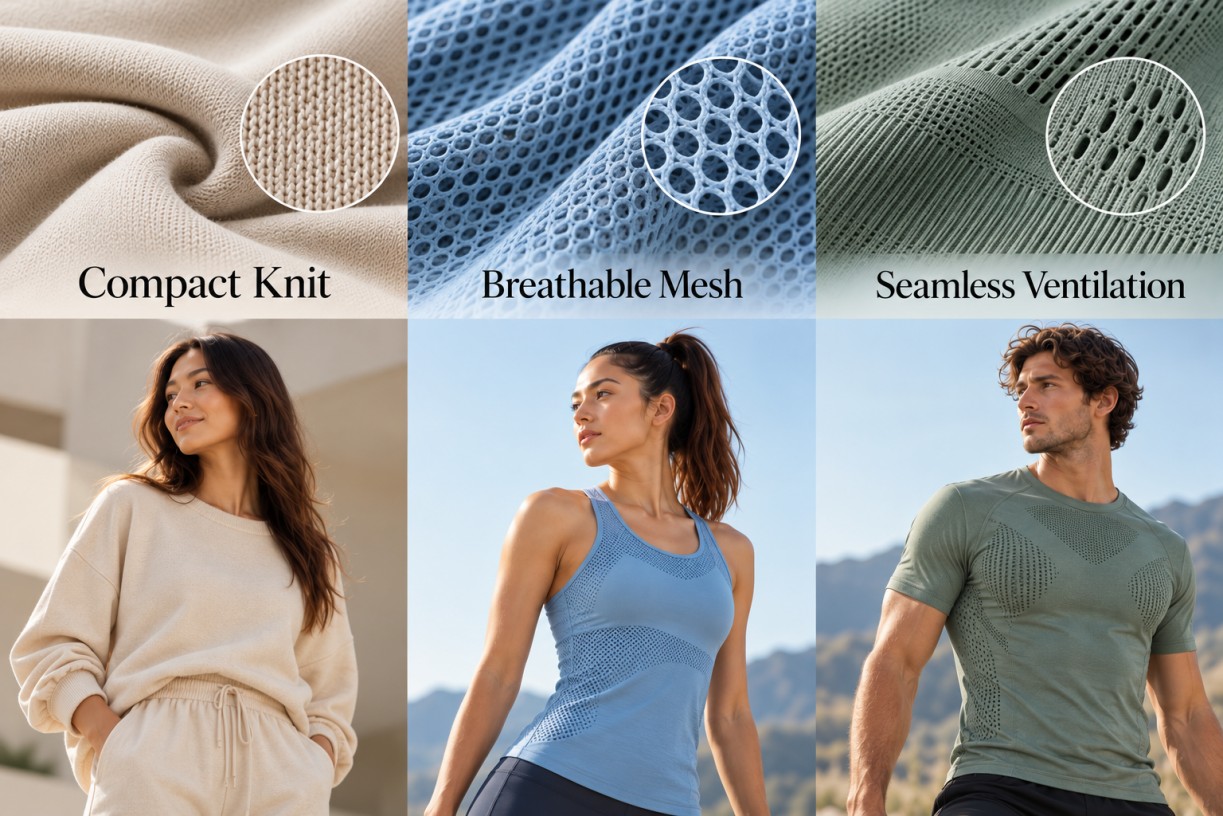
Knitting determines how tightly yarns are arranged. Open structures can increase airflow, while compact structures can improve coverage and support.
Seamless structures can also create ventilation zones in selected areas. Sansansunsports develops both cut-and-sew and seamless activewear according to product requirements.
How Yarn and Knit Structure Affect Stretch and Recovery
A higher elastane percentage does not automatically mean better overall performance. Yarn engineering and knit construction also affect how a fabric stretches. Stretch, recovery and compression are different properties: stretch describes how much a fabric extends, recovery describes how well it returns to its original dimensions, and compression describes the pressure a garment applies to the body. These properties should be evaluated separately for the intended garment.
For growing brands, the goal should be the right balance of stretch, recovery, compression and comfort for the intended activity.
How Next-Generation Material Categories Differ
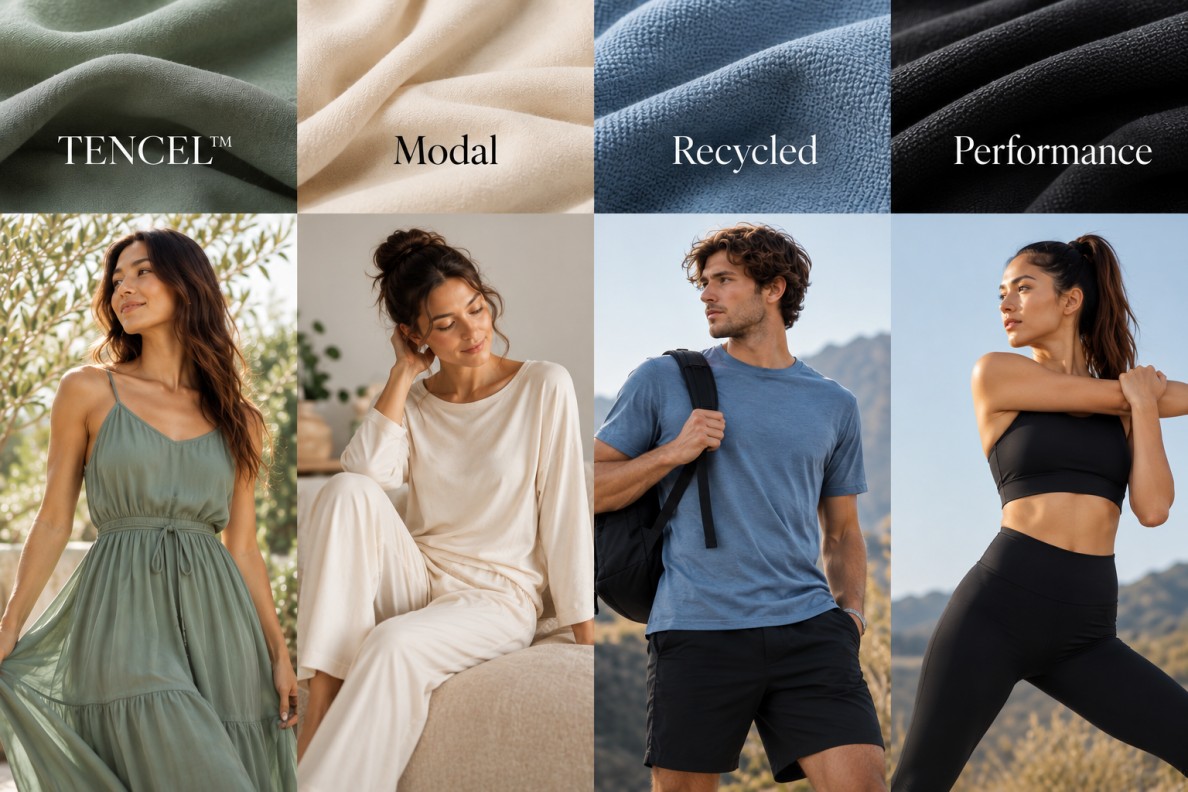
TENCEL™ Lyocell and Modal are cellulosic fibers often selected for softness and comfort.
Recycled fibers are classified by source, such as recycled polyester or recycled nylon. Bio-based materials refer to materials made partly or fully from renewable biological resources.
These are different categories, so their performance should not be judged from the material name alone. GSM, construction, stretch, durability and intended use still need evaluation.
Built-In Performance vs. Surface Finishing: Which Is Better?
Neither method is automatically better.
Fiber shape and knit structure may support moisture movement or airflow, while specific finishes can provide cooling, water resistance or other functions. Some well-developed finishes can also maintain performance after repeated washing. The correct comparison must therefore focus on a specific function and use suitable testing.
How Activewear Brands Should Evaluate Fabrics Before Sampling
Before sampling, check composition, yarn, GSM, knit structure, hand feel, opacity, stretch recovery, shrinkage and the performance functions required for the product.
Sansansunsports supports growing brands through OEM, ODM and MDMD—Material, Design, Manufacture and Delivery. MDMD connects material selection, product development, manufacturing and delivery so brands can evaluate fabric and garment requirements as one complete project.
Learn more about Sansansunsports custom activewear development: https://www.sansansunsports.com/custom
Frequently Asked Questions
Can two fabrics with the same composition perform differently?
Yes. Yarn, GSM, knitting structure and finishing can change softness, stretch, breathability, coverage and recovery.
Is built-in performance always more durable than a finish?
No. It depends on the specific function and technology. Both should be verified with suitable performance and wash tests.
What should growing brands test first?
Start with GSM, stretch recovery, opacity, shrinkage, breathability and wash performance based on the garment's intended use.
Conclusion
Activewear performance is created by more than fiber composition. Fiber, yarn engineering, knit structure, GSM and finishing work together to determine how a garment feels and performs.
For growing brands, evaluating these factors before sampling can improve consistency and reduce unnecessary redevelopment when moving toward bulk production.
Sansansunsports supports brands with fabric sourcing, performance evaluation, sampling and OEM, ODM and MDMD activewear manufacturing.
Developing your next activewear collection? Contact Sansansunsports to discuss your fabric, performance and product requirements and find a material solution suited to your brand and target market.
 How to Start a Profitable Custom Activewear Business in 5 Steps
 You May Also Like




 Tel
Tel
 WhatsApp
 Email
Email
 Address
Room 202, No.130, Xianglong Street, Lubian, Chashan Town, Dongguan city, Guangdong Province


 Request a Custom Quote