 Inquire(

 HOME
Why Two Fabrics with the Same Composition Feel Different
 2026-11-13

 Sansansun
Why Two Fabrics with the Same Composition Feel Different
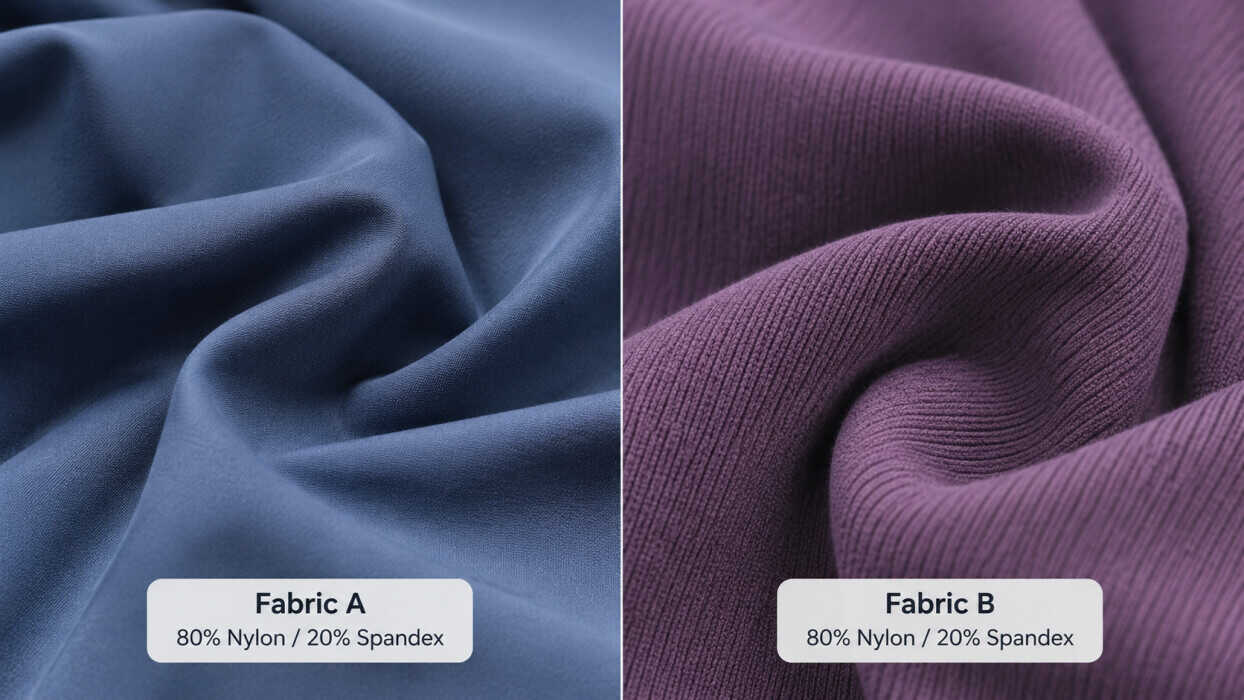
Two activewear fabrics may both contain 75% nylon and 25% spandex, yet one feels soft and smooth while the other feels firm and supportive. Why?
For growing activewear brands, fabric composition alone cannot determine fabric quality, comfort, or performance. Yarn characteristics, knitting structure, fabric weight, and finishing processes all influence the final result.
Understanding these differences helps brands select suitable fabrics for leggings, sports bras, Pilates wear, and everyday athleisure before starting production.
Same Fabric Composition, Different Feel: Why Does It Happen?
Fabric composition describes the percentage of each fiber used in a material. However, it does not explain how the fabric is made.
For example, two fabrics containing 75% nylon and 25% spandex can have different surface textures, thicknesses, stretch resistance, and recovery.
One may feel smooth and lightweight, making it suitable for yoga tops. Another may feel denser and more supportive, making it suitable for fitted leggings.
Neither fabric is automatically better. Their suitability depends on the intended product.
For activewear brands, fiber composition is the starting point—not the final standard for fabric selection.
Yarn Quality and Construction: The Foundation of Fabric Softness
The first major difference begins with the yarn used to produce the fabric.
Even when two fabrics use the same fiber composition, their yarns may differ in linear density, filament count, individual filament fineness, and texturing method. For filament yarns, the thickness of the whole yarn is not the same as the fineness of each filament. Ask suppliers for the yarn specifications when investigating differences in hand feel.
Finer yarns can help create a smoother surface, while textured yarns can produce a fuller or softer hand feel, depending on their construction.
Yarn characteristics also influence fabric flexibility, surface appearance, and durability.
For example, a growing activewear brand developing a soft Pilates top may prioritize smoothness and drape. A brand developing supportive leggings may require a different balance of softness and resistance.
This explains why selecting fabric by composition alone cannot guarantee the desired wearing experience.
Knitting Structure and GSM: Why Fabric Construction Matters
After yarn selection, the knitting process determines how the fabric is constructed.
Different knitting structures create different levels of thickness, flexibility, stability, and surface smoothness.
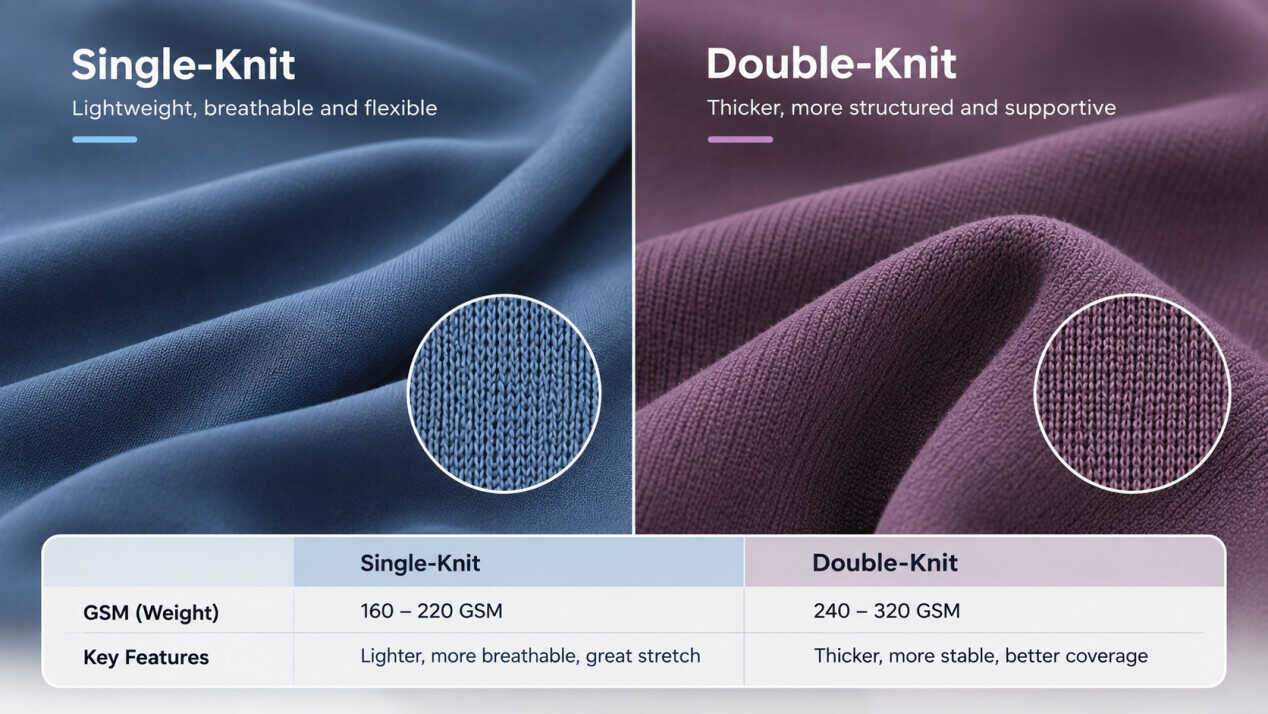
For example, certain single-knit structures can produce lightweight, flexible fabrics, while double-knit constructions may provide additional structure and coverage.
Fabric weight, measured in GSM (grams per square meter), is another important factor.
|
Fabric characteristic |
Effect on finished activewear |
|
Knitting structure |
Influences stretch, stability, and drape |
|
Fabric density |
Affects coverage and surface appearance |
|
GSM |
Measures mass per unit area; does not by itself establish thickness, opacity, or compression |
A higher GSM does not automatically guarantee better opacity or compression. Yarn selection and knitting density also matter.
Brands should evaluate fabric weight and construction together, especially when developing leggings, sports bras, and fitted studio wear.
The Role of Fabric Finishing in Softness and Texture
Even when yarn composition and knitting structure are similar, finishing treatments can create noticeably different fabric surfaces.
Fabric finishing refers to processes applied after knitting or dyeing to achieve specific characteristics.
For example, brushing and peaching can create a softer, slightly fuzzy surface, while heat setting helps stabilize fabric dimensions.
Softening treatments may also change surface feel without changing the labeled fiber composition.
Consider two nylon-spandex leggings fabrics: one brushed and one non-brushed.
The brushed version may feel warmer and more velvety. The non-brushed version may provide a smoother surface and feel less insulating.
For activewear brands targeting the UAE and Saudi Arabia, non-brushed materials may be worth evaluating for hot-weather training, while brushed fabrics may suit cooler conditions.
However, finishing must also be evaluated for stretch recovery, pilling resistance, and wash durability.
Choosing Between Similar Fabrics: What Activewear Brands Should Compare
Understanding fabric construction is useful, but the most important question for growing activewear brands is: Which fabric is suitable for the product we want to develop?
Instead of selecting the softest sample immediately, brands should compare fabrics against their intended garment requirements.
For example, a Pilates top may prioritize softness, comfortable stretch, and drape. Fitted leggings need recovery appropriate to the intended fit, waistband stability, and opacity during movement. If compression is a product requirement, evaluate it in the finished garment across the intended sizes rather than inferring it from fabric firmness or stretch resistance alone.
Before approving fabric, brands should evaluate hand feel, GSM, stretch and recovery, opacity, surface appearance, and performance after washing.
Compare samples in the same conditioning and laundering state, using consistent specimen sizes and the same test method. For stretch and recovery, compare corresponding fabric directions and follow the method's specified loading or extension conditions and recovery time. For opacity, use consistent lighting and stretch levels, then confirm performance in the actual garment colors and sizes, including damp conditions where relevant. Use the same wash-and-dry procedure for durability comparisons.
This helps brands avoid choosing a material that feels excellent as a swatch but performs poorly in a finished garment.
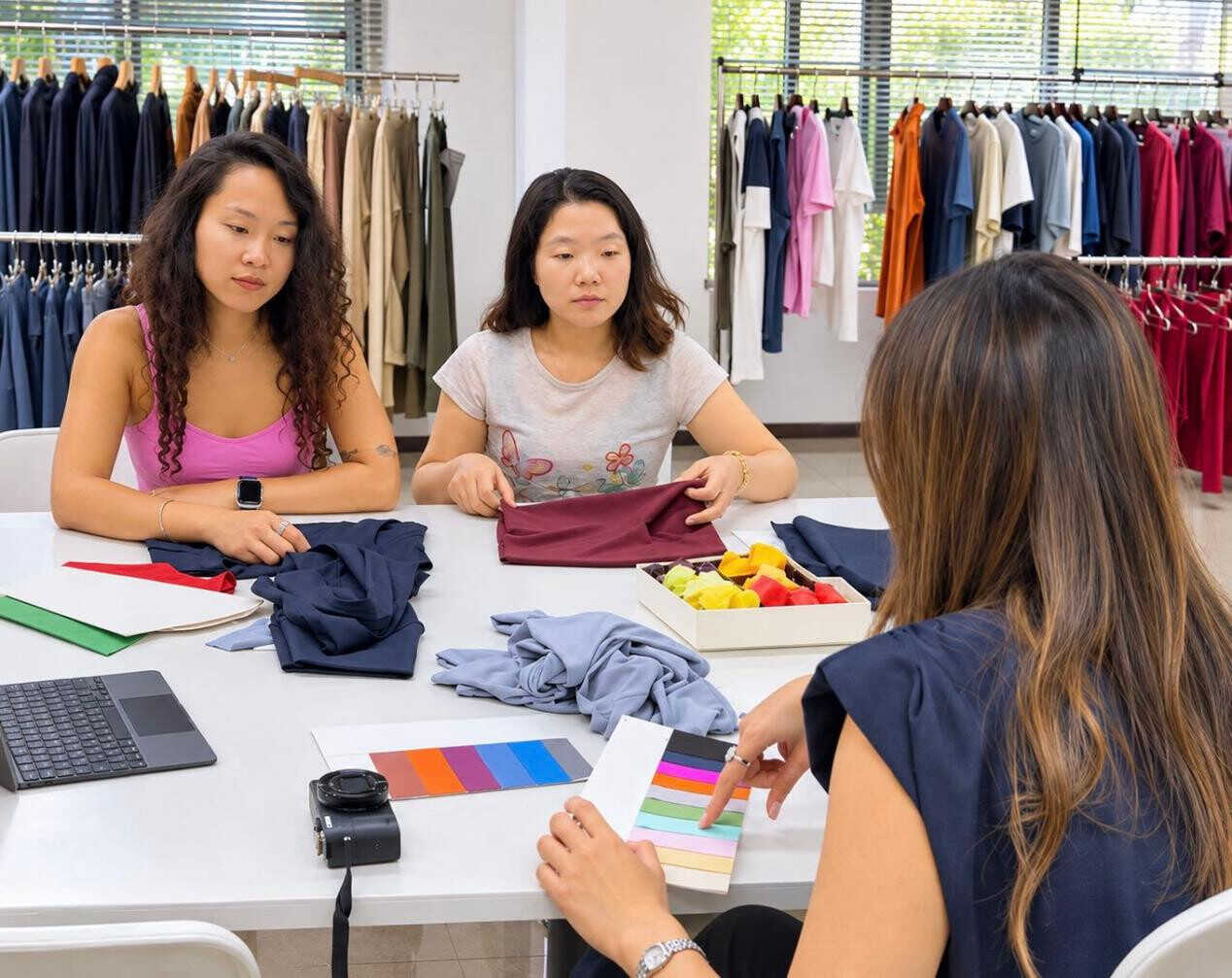
From Fabric Selection to Production: SANSANSUNSPORTS' Approach
Choosing fabric is only one step in activewear product development. The selected material must also work with the garment pattern, construction, and intended activity.
At SANSANSUNSPORTS, we support growing activewear brands through fabric sourcing, material comparison, pattern development, and sampling.
The development process begins by understanding the brand's product requirements, including desired hand feel, fit, coverage, stretch, and garment application.
Suitable fabric options can then be compared, followed by physical sample development.
For example, a soft nylon-spandex fabric may feel ideal for leggings but require further evaluation of waistband stability, recovery, and squat opacity.
During sampling, these characteristics can be assessed and necessary adjustments made before final approval.
Clear material specifications and approved samples provide a reference for maintaining consistency during bulk production.
Frequently Asked Questions (FAQ)
Does a higher GSM mean better activewear fabric quality?
Not necessarily. GSM measures fabric weight, not overall quality. A higher-GSM fabric may provide more structure, while a lighter fabric may offer better drape. The ideal GSM depends on the garment's intended use, knitting structure, and performance requirements.
How can activewear brands choose between fabrics with identical compositions?
Growing activewear brands should compare hand feel, stretch and recovery, opacity, fabric weight, and wash performance. They should also evaluate physical garment samples to confirm whether the selected fabric suits their leggings, sports bras, or Pilates tops.
How does SANSANSUNSPORTS help brands select the right activewear fabric?
SANSANSUNSPORTS supports growing activewear brands through fabric sourcing, material comparison, pattern development, and sampling. By evaluating fabric characteristics alongside garment requirements, we help brands make informed material decisions before bulk production.
Conclusion
Two fabrics with the same composition can feel and perform differently because fiber percentages tell only part of the story.
Yarn characteristics and knitting structure influence surface feel, stretch behavior, thickness, and stability. GSM describes mass per unit area and should be considered alongside these properties. Finishing processes further change texture and wearing experience.
For growing activewear brands, the right fabric is not simply the softest or thickest option—it is the one that matches the finished product's requirements.
SANSANSUNSPORTS supports international activewear brands through OEM, ODM, and MDMD services, connecting fabric selection with garment development, sampling, and manufacturing.
Developing your next yoga wear, Pilates, gymwear, or modest activewear collection? Contact SANSANSUNSPORTS to compare fabric options and discuss the materials best suited to your product vision.
 Developing a Modal-Blend Pilates Collection
 You May Also Like




 Tel
 WhatsApp
 Email
 Address
Room 202, No.130, Xianglong Street, Lubian, Chashan Town, Dongguan city, Guangdong Province


 Request a Custom Quote